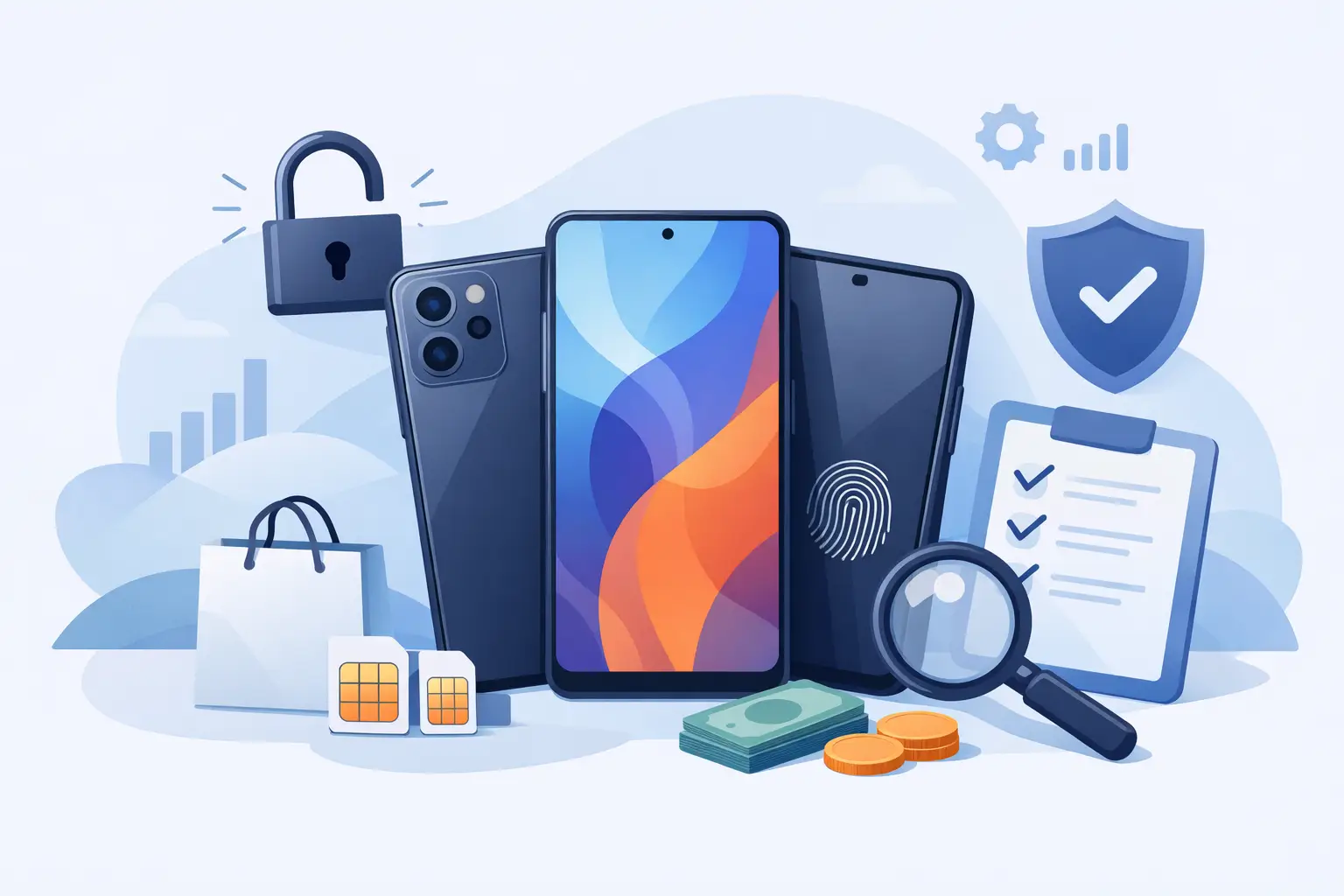
If you are comparing new phones for sale unlocked, the first question is not just which brand to pick. It is whether the phone fits how you actually use it every day, how soon you need it, and how much you want to spend for storage, battery life, and camera performance. A good deal only makes sense when the device is ready for your network, your apps, and your budget.
Unlocked phones appeal to practical buyers for one simple reason – flexibility. You are not tied to a single carrier plan, and you usually have more room to compare prices across brands, storage variants, and promotions. For buyers who want a straightforward purchase, that matters more than hype.
Why new phones for sale unlocked make sense
A new unlocked phone gives you more control from day one. You can insert your preferred SIM, switch plans later, and avoid being boxed into a contract-first decision. That is especially useful if you change providers often, travel, use separate work and personal numbers, or simply want the freedom to shop based on value instead of carrier packaging.
There is also a clear pricing angle. Carrier bundles can look attractive upfront, but the real cost depends on the total plan commitment. With unlocked devices, the phone price is easier to compare because it is usually presented directly. You can see whether paying more gets you meaningful upgrades like higher storage, more RAM, a better display, or faster charging.
That said, not every unlocked phone is automatically the right buy. Some buyers end up overspending on features they barely use, while others pick the cheapest option and regret weak battery life, limited software support, or too little storage after a few months.
What to look for before you buy
The best buying decision usually comes down to five things: model, variant, condition, compatibility, and after-sales support. When these are clear, the rest becomes much easier.
Start with your usage, not the brand name
A lot of shoppers begin with Apple, Samsung, Xiaomi, Google, or Nothing because those names are familiar. That is fine, but your daily needs should lead the search. If you mostly use messaging, social apps, streaming, and payment apps, you probably do not need a top-tier flagship. A solid mid-range phone with enough memory and a dependable battery may be the smarter buy.
If you take a lot of photos, record video, or use your phone for work on the move, then paying more for camera quality, brighter displays, and better processors can be justified. Students and budget-focused buyers usually get better value by choosing last season’s strong model over the newest release with a higher launch price.
Check storage and RAM carefully
This is where many people either save money wisely or create problems for themselves. A phone may look cheap until you realize the storage is too small for photos, videos, games, and app updates. Then you are managing space every week.
For many users, 128GB is the practical starting point today. If you shoot a lot of video, keep large files on your phone, or play heavier games, 256GB gives more breathing room. RAM matters too, especially if you keep many apps open or want smoother performance over time. Comparing price without checking the exact memory and storage variant can lead to a bad comparison.
Confirm network and local set details
Unlocked should mean broader SIM freedom, but you still want to confirm the phone is suitable for your local network use. Different market sets can vary in supported bands, software setup, and warranty handling. Buyers who care about convenience should always check whether they are getting a local set, what warranty applies, and how support works if there is an issue.
This is one reason many buyers prefer established retailers over random marketplace listings. Clear product details reduce guesswork. If a listing is vague about variant, set type, or warranty, treat that as a warning sign.
Price matters, but value matters more
The cheapest new phone is not always the best buy. The better question is what you get for the money right now. Sometimes a slightly older premium model offers stronger cameras, build quality, and performance than a newer entry-level phone at a similar price.
There is also the timing factor. Prices shift when new models launch, when storage variants go on sale, or when retailers clear older stock. If you are not in a rush, watching pricing across a short period can help. But if your current phone is failing, immediate availability and peace of mind may be worth more than chasing the lowest possible number.
A dependable retailer makes this easier by showing clear pricing and exact configurations instead of forcing you to ask basic questions one by one. That saves time and avoids misunderstandings at checkout.
Best buyers for unlocked phones
New phones for sale unlocked are a strong fit for several types of buyers. Students often want recognized brands without the cost of a flagship contract bundle. Young professionals may want dual-SIM flexibility or the freedom to change plans. Everyday users usually just want a phone that works well, has enough battery to last the day, and does not come with carrier-related complications.
Unlocked devices also suit upgraders who plan to trade in or resell later. A phone bought cleanly at a fair market price is easier to evaluate when it is time to move on. For value-focused shoppers, that resale angle matters more than people think.
Where buyers go wrong
The most common mistake is shopping only by headline price. A lower price can hide a lower storage version, weaker warranty support, or a market variant that is less convenient locally. Another mistake is buying too much phone. If you never use advanced camera features, mobile gaming, or editing apps, paying flagship money may not improve your daily experience much.
Some shoppers also ignore accessories and setup costs. A new phone may need a case, screen protector, charger, or data transfer support depending on what is included in the box. That changes the true purchase cost.
Then there is the trade-in question. If you have an older device, trading it in can offset part of the new purchase. Buyers sometimes overlook this and focus only on the sticker price. A store that handles both sales and buy-back can make upgrading simpler and more cost-effective.
Comparing brands without overthinking it
Most major brands now cover multiple price levels, so the smart move is to compare within your budget band instead of assuming one brand always wins. Apple tends to hold value well and offers a familiar experience for buyers already in that ecosystem. Samsung covers a wide range from budget to flagship and is often a strong all-round option. Google appeals to buyers who want a clean software experience and reliable camera performance. Xiaomi, Poco, Realme, Honor, Oppo, Infinix, Sharp, and Nothing can offer aggressive value depending on the exact model and promotion.
What matters most is not the logo alone. It is how much phone you are getting at that price today. A practical store should help you compare model against model, not just brand against brand.
Buying from a retailer vs a casual seller
For a new unlocked phone, retailer trust still matters. A proper retailer is more likely to present exact specs, available colors, local set information, and sale pricing clearly. You also have a straightforward place to contact if there is a problem, if stock changes, or if you want to compare alternatives.
That is the advantage of shopping with a no-nonsense seller such as Gadget Affair. Buyers want product readiness, fair pricing, and clear details. They do not want to chase vague listings or guess what they are actually paying for.
Final checks before payment
Before you buy, verify the exact model number, storage and RAM variant, set type, warranty terms, and box contents. Make sure the price matches the configuration shown. If you are comparing several phones, narrow the decision by what you will notice daily – battery life, display quality, camera consistency, storage, and how long you plan to keep the phone.
A good unlocked phone purchase should feel simple. Not flashy, not confusing, just right for the money. If the listing is clear, the specs match your needs, and the price is fair for the variant, you are already close to the right choice. The best buy is the one that works well from day one and still feels like a smart decision months later.