A phone deal can look great until you find out the set is not suitable for local use, the battery is tired, or the advertised storage is not what you expected. If you are deciding where to buy phones Singapore shoppers can rely on, do not start with the lowest price. Start with the seller, the exact device variant, and what happens after you hand over your money.
Singapore has plenty of places to buy a phone, from official brand stores and telco outlets to neighborhood retailers and online marketplaces. Each has a place. The right one depends on whether you want a brand-new flagship, a practical mid-range device, or a verified pre-owned phone that keeps more cash in your pocket.
Where to Buy Phones in Singapore Based on Your Needs
The best place to buy is not always the most obvious one. A first-time buyer who wants full manufacturer support may prefer an official store. A student replacing a cracked handset may care more about getting a reliable model today at a sensible price. Someone upgrading from last year’s flagship may get the best value by trading in their old device and buying a checked pre-owned replacement.
Official brand stores and authorized retailers
Official stores are a straightforward choice when you want the newest model, a clean manufacturer warranty process, and a predictable buying experience. They are particularly useful for launch-day buyers, customers looking for specific colors or storage configurations, and people who want help setting up services such as device protection or data transfer.
The trade-off is price. Official retail pricing is usually firm, and promotions may be limited to bank offers, trade-in campaigns, or bundled accessories. If you already know which phone you want and care most about getting a sealed local set, that may be worth paying for. If value is your priority, compare the same model at a reputable multi-brand retailer before checking out.
Telco shops and contract plans
Telco outlets can make sense if you need a new mobile plan as well as a phone. The upfront handset price may look attractive when it is tied to a contract, especially for premium devices. This route can be convenient, but it is worth doing the full math.
Check the monthly plan cost, contract length, data allowance, early termination fee, and whether the phone price is truly lower over the full term. A cheaper phone upfront can cost more than buying the handset separately and using a SIM-only plan. For users who already have a good plan, buying an unlocked device gives more flexibility when it is time to switch providers.
Established multi-brand mobile retailers
A trusted mobile retailer is often the practical middle ground. You can compare Apple, Samsung, Google, Xiaomi, Honor, Oppo, Nothing, and other brands in one place instead of visiting several stores. That matters when you are comparing real differences such as camera quality, charging speed, storage, software support, and repair costs.
Look for clear listings that state the model, storage size, RAM where relevant, color, set type, and condition. A good retailer should be direct about whether a device is new or pre-owned, what is included in the box, and whether the price is promotional. This saves you from guessing whether two listings are actually for the same configuration.
Gadget Affair is one option for shoppers who want to browse new and inspected used phones across multiple brands, with the option to view devices in person at Burlington Square 01-12.
Online marketplaces and peer-to-peer listings
Marketplace listings can offer low prices, especially for older flagships and lightly used phones. But the buyer carries more responsibility. Photos can hide scratches, screen burn-in, weak batteries, camera faults, or charging issues. A device can also be financed, blacklisted, activation-locked, or missing parts that are expensive to replace.
This does not mean every peer-to-peer deal is a bad deal. It means you need time, product knowledge, and a safe way to inspect the phone before payment. If you are not comfortable checking a device thoroughly, a retailer that has already inspected and graded it is usually the safer choice, even if the sticker price is slightly higher.
What to Check Before You Buy a Phone
Price gets attention, but the details decide whether you have made a good purchase. Before committing, confirm the exact model number and configuration. Many phones look identical across regions but can have different network band support, eSIM features, warranty terms, or software behavior.
For a new phone, ask whether it is a local set and how warranty support works. A local set is generally the simpler option for Singapore buyers because it is intended for the local market. If a store sells an import set, that is not automatically a reason to walk away, but you should understand who handles the warranty and whether features you need will work as expected.
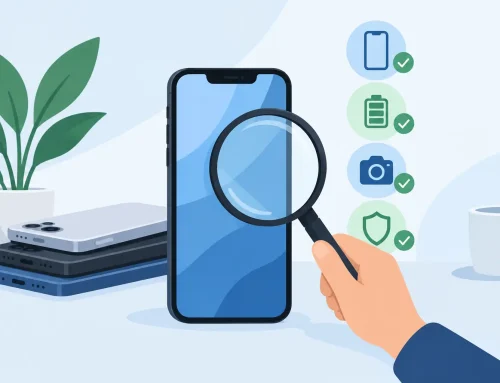
For a used phone, condition matters as much as the model. Cosmetic wear is one thing. Functional problems are another. Check the display for dead pixels, touch issues, discoloration, burn-in, and deep scratches. Test the cameras, speakers, microphones, buttons, fingerprint reader or face unlock, charging port, Wi-Fi, Bluetooth, and mobile signal. If the phone supports eSIM, confirm that it can be activated correctly.
Battery health deserves special attention on older devices. A phone can look nearly new but still need frequent charging if its battery has degraded. Ask for the battery health reading where the operating system provides one, or ask how the device has been assessed. Also check whether the phone has been reset properly and is free from activation locks tied to the previous owner.
New or Used: Which Gives Better Value?
A new phone gives you the longest usable lifespan, full warranty coverage, untouched accessories, and the comfort of knowing its history. It is the better choice when you need the newest features, expect to keep the device for several years, or rely on it for work and cannot risk downtime.
Used phones are often the smarter buy when you want a higher-tier device without flagship pricing. A one- or two-generation-old premium phone may have a better display, camera system, build quality, and processor than a brand-new budget model at the same price. The catch is that used condition varies, so the seller’s inspection standards matter.
There is also a middle option: buy new in the value or mid-range category. Brands such as Xiaomi, Poco, Realme, Honor, and Infinix often offer strong batteries, large displays, and generous storage for the money. They may not match a top flagship camera or have as many years of software support, but they can be exactly right for streaming, school, social media, navigation, and daily messaging.
Do Not Forget the Trade-In Value
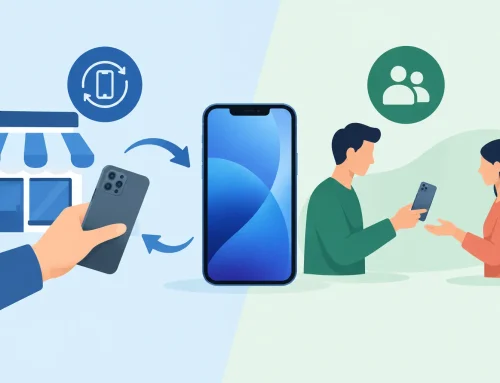
Your current phone is part of the purchase decision. Before buying a replacement, find out what your old device is worth. Even a phone with cosmetic wear can offset part of the cost of an upgrade, while recent iPhone, Samsung Galaxy, Google Pixel, and other popular models can retain meaningful value.
Be realistic about condition. Cracked displays, battery issues, damaged cameras, water exposure, and activation locks reduce trade-in value. Back up your data, sign out of your accounts, remove the SIM card, and reset the device only after you have confirmed the trade-in process. A transparent buyer should explain why a quoted value changes if they find an issue during inspection.
A Better Way to Compare Phone Deals
When comparing two offers, line up the same details: model, storage, set type, condition, warranty, included accessories, and trade-in value. A lower price is only a real saving if those details match. Paying a little more for a tested device, a stated warranty, or an easy place to return to if something is wrong can be the better deal.
It also helps to think beyond the handset. A protective case and screen protector cost far less than a display repair. If you are buying a phone with no charger included, make sure you have a compatible charger that supports safe, appropriate charging speeds. Small extras can change the final cost, so factor them in before deciding.
The best phone shop is the one that makes the details easy to see, lets you ask direct questions, and gives you a device that suits your budget without surprises. Buy the phone you will still be happy using six months from now, not just the one with the most tempting price tag today.