A fitness tracker that needs charging every other week sounds great – until you want to answer a call, pay for lunch, or check directions without pulling out your phone. That is where smartwatch vs fitness band differences become more than a specs comparison. The better choice depends on what you expect the wearable to do between workouts, at work, and on the move.
For most buyers, the decision comes down to three things: budget, battery life, and how much phone-like convenience you actually want on your wrist. A fitness band keeps the job focused and affordable. A smartwatch does more, but it usually costs more and asks for more frequent charging.
Smartwatch vs fitness band differences at a glance
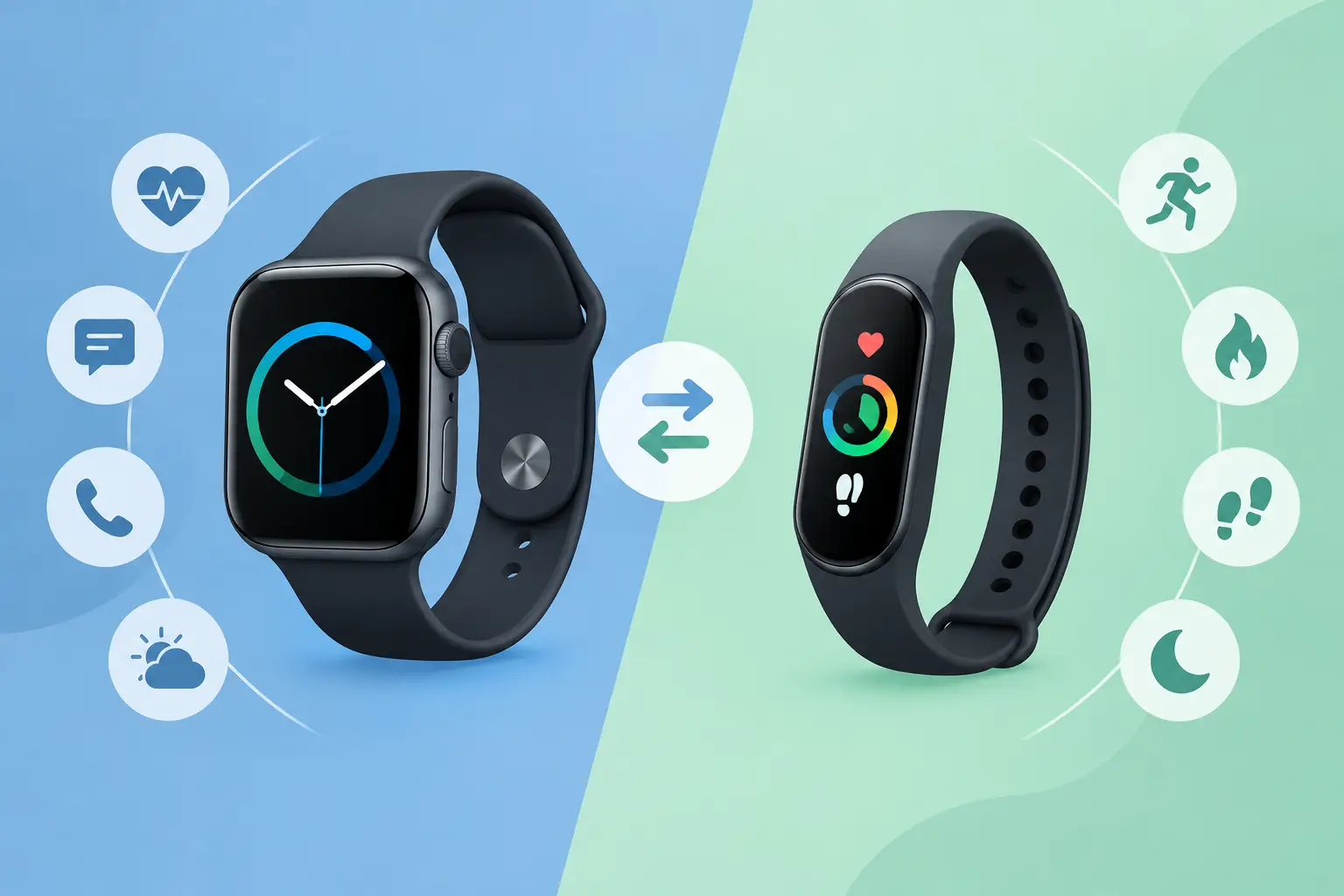
A fitness band is designed mainly for activity and wellness tracking. It is usually slim, light, and built around essentials such as step counts, heart rate, sleep data, workout modes, alarms, and phone notifications. Many current bands also include blood oxygen tracking, stress estimates, menstrual-cycle tracking, and basic GPS support through a paired phone.
A smartwatch is closer to a small companion device for your phone. Along with health and exercise features, it typically offers a larger color display, better notification handling, calls, app support, music controls, voice assistants, contactless payments, and more customizable watch faces. Higher-end models may include built-in GPS, cellular connectivity, fall detection, advanced running metrics, or ECG features, depending on the brand and model.
Neither is automatically better. If you mainly want to know whether you moved enough, slept well, or completed your daily walk, a fitness band can be the smarter purchase. If you want to leave your phone in your pocket more often, a smartwatch earns its higher price.
Design and screen: subtle tracker or mini phone?
Fitness bands are made to disappear on the wrist. Their narrow screens and lighter bodies make them easy to wear overnight, during gym sessions, and in humid weather. They also tend to look less formal and more sporty, though interchangeable straps can change that quickly.
Smartwatches look and feel more like traditional watches. Their larger square or round displays are easier to read for messages, maps, workout stats, and incoming calls. The trade-off is size. A larger case can feel bulky for smaller wrists, and it may catch on sleeves or feel less comfortable when sleeping.
Screen quality also changes the experience. A smartwatch generally has more room for detailed charts, bright always-on display options, and richer watch faces. A band gives you the basics at a glance. That is enough for many people, especially if they do not want another screen competing for attention.
Battery life is usually the biggest difference
Fitness bands win clearly on battery life. Depending on screen settings and tracking use, many can last from one to two weeks on a charge. That means fewer interruptions to sleep tracking and less chance of leaving home with a dead wearable.
Most smartwatches need charging every day or every few days. Models with always-on displays, built-in GPS, cellular data, music playback, or frequent calls use battery faster. Fast charging helps, but it does not change the habit: you need to plan charging around your routine.
This matters more than it may seem. A smartwatch with excellent sleep features is less useful if it spends every night on the charger. On the other hand, if you already charge your phone, earbuds, and watch in one spot each evening, daily smartwatch charging may not bother you at all.
Health and fitness tracking: similar basics, different depth
Both device types now cover the features most people expect: steps, calories, heart rate, sleep, workout tracking, and inactivity reminders. For casual activity tracking, a good fitness band can be surprisingly capable. It may offer walking, running, cycling, swimming, strength training, and other activity modes for a fraction of the price of a smartwatch.
The difference shows up when you want more detail or more independence from your phone. Smartwatches often have better GPS accuracy because many include built-in GPS. That lets runners and cyclists record routes, pace, distance, and elevation without carrying a phone. Fitness bands without built-in GPS can still track routes, but they rely on the phone’s location connection.
Smartwatches can also provide more advanced training data, such as recovery guidance, training load, running dynamics, heart-rate zones, and live workout prompts. These are useful if you are following a running plan, preparing for an event, or trying to improve specific performance metrics.
Still, do not buy based on feature count alone. Health readings from consumer wearables are useful for spotting patterns, not for diagnosing a medical condition. If a device flags an unusual result or you have symptoms, speak with a qualified healthcare professional rather than relying on wrist data.
Smart features: where a smartwatch pulls ahead
If notifications are your main concern, both options can show calls, texts, app alerts, and calendar reminders. A fitness band is best for quick glances. You can see who contacted you and decide whether to take out your phone.
A smartwatch gives you more ways to act on those alerts. Depending on the model and your phone, you may be able to reply to messages, answer Bluetooth calls, use voice commands, control smart-home devices, access navigation, download apps, and make tap-to-pay purchases. Some cellular-enabled models can make calls and receive messages away from your phone, as long as your carrier plan supports it.
Those features are convenient, but they are not essential for everyone. If you are trying to reduce screen time, seeing full messages and app alerts on your wrist can be more distracting than helpful. A simpler band is often better for people who want tracking without constant digital interruptions.
Price and value: buy for the features you will use
Fitness bands are usually the value choice. They give you core health tracking, a lightweight design, and long battery life without pushing your budget. They are a practical first wearable for students, casual gym users, and anyone replacing an old pedometer or basic digital watch.
Smartwatches cover a wider price range. Entry-level models may be reasonably priced, while premium versions add stronger materials, larger displays, advanced sensors, and cellular options. Before paying more, check whether the extra features match your routine. Built-in GPS matters for phone-free outdoor workouts. NFC payments matter if you will actually use them. Cellular is only worth considering if you regularly leave your phone behind.
Also factor in ecosystem compatibility. Apple Watch models are designed for iPhone users. Many Android-focused watches work best with Android phones, although exact features can vary by brand and device. Fitness bands are often more flexible across Android and iPhone, but notification replies, payments, and voice functions may be limited on one platform or the other. Always confirm compatibility before buying.
Which wearable should you choose?
Choose a fitness band if you want a comfortable, low-cost device for step counts, sleep, heart rate, basic workouts, and quick notifications. It is the better fit when battery life matters most, you do not need apps or calls on your wrist, and you prefer a lighter design.
Choose a smartwatch if you want a larger screen, better workout detail, GPS without your phone, richer notifications, calls, payments, and apps. It makes sense for runners, busy professionals, commuters, and anyone who wants their wearable to handle small tasks without reaching for their phone.
For many buyers, the best move is to start with the simplest device that meets your everyday needs. A band that you wear consistently is more useful than a feature-packed watch that stays in a drawer. If you want to compare the fit, screen size, and comfort before deciding, trying a few options on in person can make the choice much clearer.