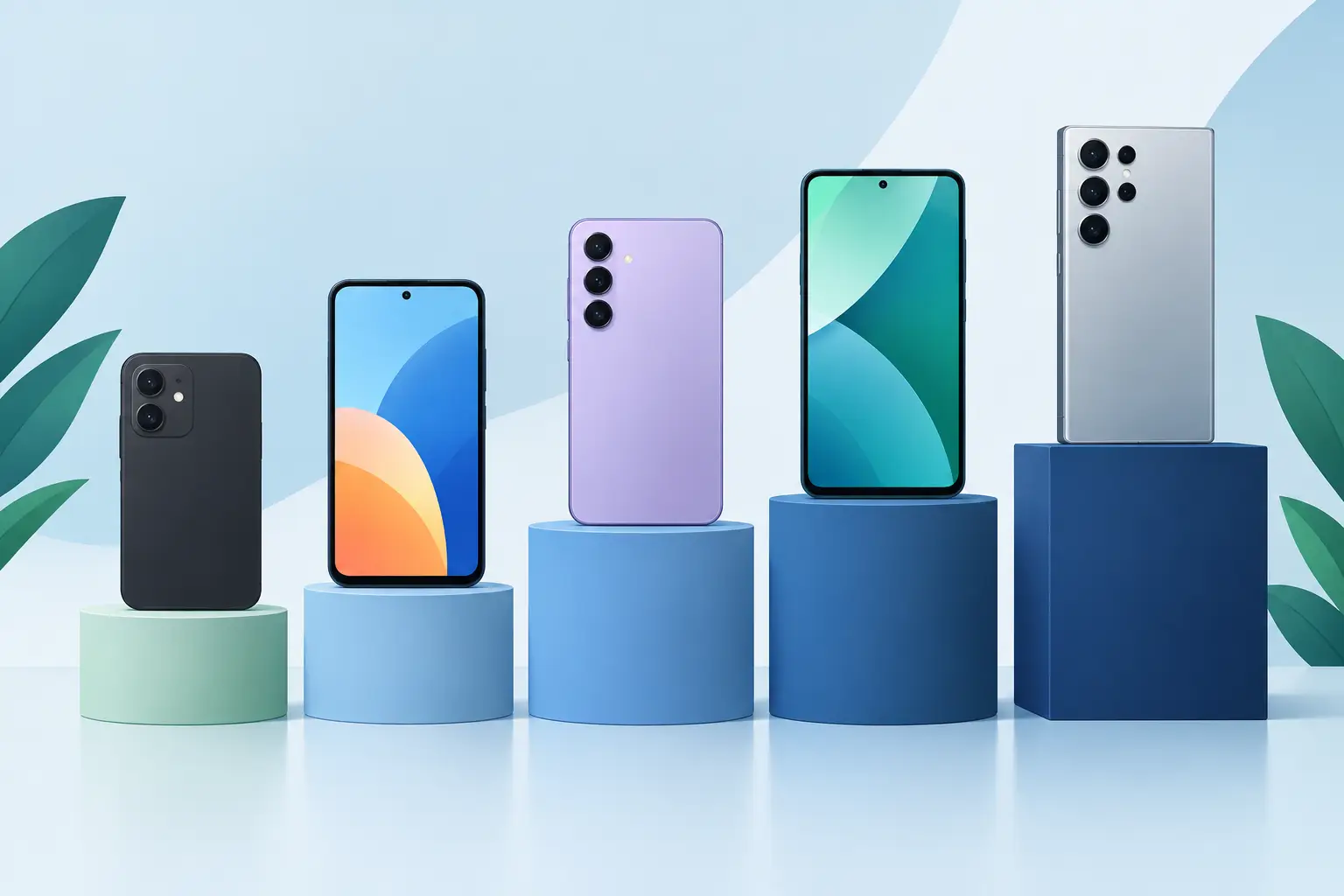
A phone that costs more is not automatically the better buy. The best Android phones are the ones that match how you actually use them: messaging, work apps, gaming, photos, streaming, navigation, or simply getting through a full day without hunting for a charger.
For most buyers, the smart move is to decide on a budget first, then compare the few features that affect daily use. A great camera is useful, but not if you need more storage. A premium processor is nice, but not if a lighter phone with better battery life suits you better. Here is how to narrow down the right Android phone without paying for specs you will never use.
Best Android Phones by What You Need
Best for a premium all-round experience: Samsung Galaxy S Ultra series
Samsung’s Galaxy S Ultra phones are for buyers who want very few compromises. You get one of the strongest Android displays available, high-end performance, a versatile camera system, stylus support on recent Ultra models, and a feature-packed software experience.
The biggest reason to choose an Ultra model is camera flexibility. The main camera handles everyday shots well, while dedicated zoom lenses are useful for travel, concerts, sports, and portraits taken from a distance. The large display also makes it a good fit for editing photos, watching videos, multitasking, and mobile gaming.
The trade-off is straightforward: these phones are large, heavy, and expensive. If you mainly use social media, messaging, banking apps, and casual photos, a standard Galaxy S model or a previous-generation flagship can give you a very similar daily experience for less.
Best for clean software and photography: Google Pixel phones
Google Pixel phones appeal to people who prefer Android without extra clutter. The software is clean, the interface is easy to understand, and Pixel-exclusive features often focus on practical tasks such as call handling, voice tools, photo editing, and smart search.
Photography is the main draw. Pixels are particularly good at quick point-and-shoot photos, especially portraits, night shots, and images with challenging lighting. You do not need to spend time adjusting camera settings to get a pleasing result. If you take photos of friends, food, pets, or travel scenes and want consistent color and skin tones, a Pixel is a strong choice.
Pixel phones are not always the best option for serious gamers or buyers who want the fastest charging speeds. Their hardware is designed around a balanced experience rather than winning every spec-sheet comparison. That is fine for most users, but worth considering if gaming performance is your priority.
Best for a familiar flagship at a lower price: Samsung Galaxy S and FE models
The standard Galaxy S line is often the sweet spot for people who want flagship quality without the size and price of an Ultra. Expect a bright screen, fast performance, reliable cameras, water resistance, and long software support. It is an easy recommendation for professionals who want a compact, polished phone that works well for both work and personal use.
Samsung’s FE models are also worth checking when value matters. They usually bring key Galaxy features, such as a good display and dependable performance, at a more reachable price. You may give up some camera hardware, premium materials, or the newest processor, but those differences are less obvious in normal day-to-day use.
Best for speed and charging: OnePlus and Xiaomi flagship models
OnePlus and Xiaomi are often strong choices for buyers who compare specifications closely. Their higher-end models commonly offer fast processors, smooth high-refresh-rate displays, generous memory options, and charging speeds that can make a real difference when you are rushing out the door.
A OnePlus phone can be a smart pick if you want quick, responsive software and strong gaming performance without paying top-tier flagship prices. Xiaomi flagship and upper-midrange phones often stand out for hardware value, with large displays, high-resolution cameras, and big batteries.
The decision here comes down to preferences. Samsung and Google tend to have an advantage in long-term software support and polished camera processing. OnePlus and Xiaomi can offer more raw hardware for the money. Neither approach is wrong, but they serve different buyers.
Best Android phone for value: Nothing, POCO, Redmi, and Realme
For students, first-time smartphone buyers, and anyone replacing an older device, the midrange market is where the strongest deals are usually found. Brands such as Nothing, POCO, Redmi, and Realme have made it possible to get a smooth display, capable camera, solid battery life, and enough power for daily apps without moving into flagship pricing.
Nothing phones are a good fit for buyers who want a clean-looking interface and a design that feels different from the usual black rectangle. POCO models are often aimed at performance-focused shoppers, making them worth a look for gaming and heavy multitasking. Redmi and Realme typically offer broad choices across entry-level and midrange budgets, so storage, charging speed, and camera priorities can guide the decision.
At this price level, manage expectations around cameras in low light, water resistance, wireless charging, and premium build materials. A good midrange phone is still an excellent daily device, but it will not match a flagship in every condition.
What Actually Matters Before You Buy
Start with storage. A 128GB phone can work for light users who stream most content and regularly back up photos. If you keep years of photos, download games, record a lot of video, or use your phone for work files, 256GB is usually the safer choice. Storage cannot be added later on most modern phones, so this is one area where spending a bit more can prevent frustration.
Next, look at battery health and charging. A larger battery number does not tell the whole story because display size, processor efficiency, and software all affect endurance. Still, a phone that comfortably lasts one full day is the baseline to aim for. Fast charging is especially valuable if your routine is busy, while wireless charging is more about convenience than necessity.
Screen quality matters every time you unlock your phone. OLED displays generally offer deeper blacks and better contrast than basic LCD panels. A 120Hz refresh rate makes scrolling feel smoother, though it is not essential for everyone. If you watch a lot of video, play games, or use your phone outdoors, brightness and display quality are worth prioritizing.
Do not choose based on megapixels alone. A well-tuned 50MP camera can beat a poorly processed 200MP camera in real photos. Look instead at the full camera setup: main camera quality, optical zoom if you need it, stabilization for video, and consistency between lenses. For most people, a dependable main camera matters more than having four average cameras.
Finally, check software support. Phones are long-term purchases, and regular security updates help keep your banking apps, personal data, and daily use protected. A current flagship generally gets more years of support, but a recent midrange model from a reliable brand can still be a sensible buy if you do not plan to keep it for five years.
New, Previous Flagship, or Used Android Phone?
Buying the newest model makes sense when you want the longest support window, a fresh battery, and the latest camera or processor improvements. But last year’s flagship can be the better value. The difference in normal use is often small, while the savings can be significant.
A verified pre-owned Android phone can stretch your budget even further. This is especially useful when a used flagship costs close to a new midrange device. You may get a better screen, stronger cameras, wireless charging, and more premium build quality for the same money.
Condition matters more than the label. Check for screen burn-in, battery condition, camera focus, charging port wear, speaker clarity, fingerprint sensor performance, and network connectivity. Make sure the device is not account-locked, confirm the storage and RAM variant, and ask what has been tested. At Gadget Affair, buyers can inspect and test eligible used devices in store, which removes much of the guesswork from pre-owned shopping.
A Simple Way to Choose
If you want the best camera and premium features, start with a Galaxy S Ultra or Google Pixel flagship. If you want a dependable compact flagship, look at the standard Galaxy S range. If gaming, fast charging, and strong specifications matter most, compare OnePlus, Xiaomi, and POCO options. If your goal is a reliable phone at the lowest sensible price, focus on recent Nothing, Redmi, Realme, or Samsung midrange models with enough storage.
The right phone is not the one with the longest spec list. It is the one that feels fast enough, lasts long enough, stores what you need, and leaves room in your budget for the accessories and protection that will help it stay in good shape.