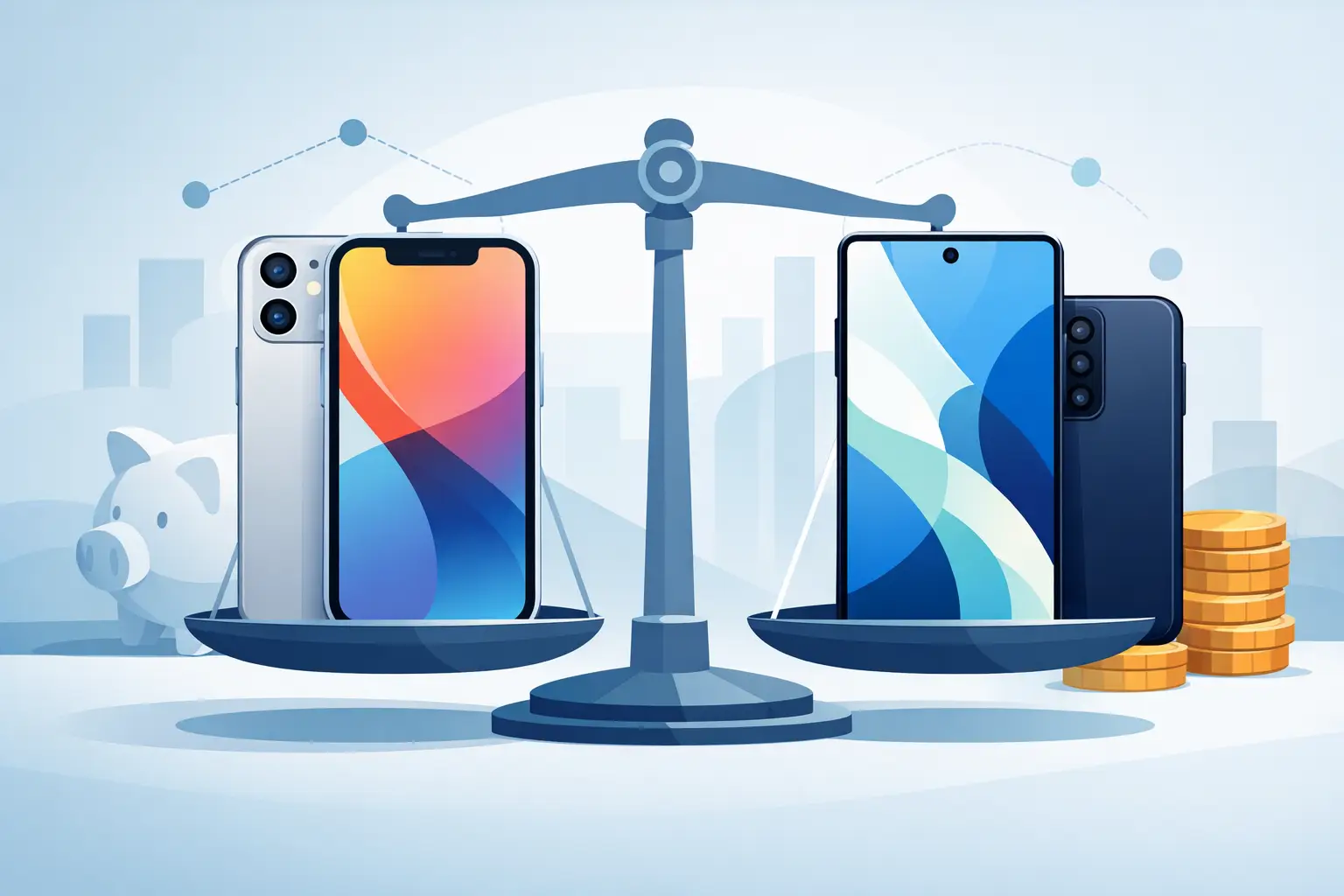
That price tag usually settles the argument faster than brand loyalty. When people compare iPhone or Samsung for budget buyers, they are rarely asking which brand is more famous. They want to know which one gives better daily value for the money, which one lasts longer, and which one feels safer to buy without regrets.
For most budget shoppers, there is no one-size-fits-all answer. If your budget is tight and you want the most hardware for the least cash, Samsung often makes the stronger first impression. If you care more about long-term resale value, simpler software support, and a device that still feels premium a few years later, iPhone can be the smarter buy even at a higher entry price. The better choice depends on how you actually use your phone and how long you plan to keep it.
iPhone or Samsung for budget buyers: start with total cost
A lot of people focus only on the sticker price. That matters, but it is not the full cost of ownership. A cheaper phone that slows down quickly, loses resale value fast, or needs replacement earlier can cost more over time.
Samsung usually wins the upfront pricing battle. In the lower and mid-range segments, Samsung has far more options. You can find budget-friendly Galaxy A series models with large screens, solid battery life, and decent cameras at prices Apple simply does not match in the new market. If your goal is to spend as little as possible today and still get a capable phone, Samsung has the advantage.
Apple plays a different game. New iPhones rarely look budget-friendly on day one, but older generations and pre-owned units often stay relevant longer. That means a used or previous-generation iPhone can make financial sense if you want a phone that holds value and stays usable for years. This is especially true for buyers who upgrade every two to three years and want a stronger trade-in or resale result later.
Where Samsung gives you more for less
If you compare new phones at the same price point, Samsung usually gives more visible hardware value. Bigger displays, higher refresh rates, larger batteries, and more camera flexibility often show up earlier in Samsung’s budget and mid-range lineup.
That matters for practical users. Students watching videos, commuters gaming on the train, and everyday users who want two-day battery life often notice these differences immediately. A budget Samsung phone can feel generous for the price because it is designed to compete aggressively in the value segment.
Storage is another area where Samsung often makes life easier. Entry-level iPhones can still feel restrictive if you keep lots of photos, videos, or apps. Samsung phones at similar or lower prices may offer more storage, and some older models also support expandable storage. For budget buyers trying to avoid cloud subscriptions or storage anxiety, that is a real benefit.
Samsung is also the easier brand if you want more choices. Small budget, mid-budget, or upper mid-range, there is usually a Galaxy model that fits. Apple’s lineup is more limited, especially if you are trying to stay under a strict spending cap.
Where iPhone can still be the smarter budget buy
Budget buying is not always about paying the least. Sometimes it is about buying once and buying well. That is where iPhone stays competitive.
Older iPhones tend to receive software updates for a long time, and the experience across models is generally consistent. For buyers who do not want to think too much about system support, app optimization, or accessory compatibility, iPhone is straightforward. It is a simpler purchase if you value predictability.
Then there is resale. iPhones usually hold their value better than Samsung phones, especially in the used market. If you know you will sell or trade in your device later, the higher upfront cost may be easier to justify. A budget buyer who spends more now but recovers more later is not necessarily overspending.
There is also the build and feel factor. Even older iPhones often still feel polished in hand and stable in everyday use. That does not mean every old iPhone is a better deal than every Samsung, but it does explain why many buyers are comfortable choosing a previous-generation iPhone over a brand-new low-cost Android phone.
New vs used changes the answer
This is where the comparison gets more realistic. In the new-phone market, Samsung is usually the easier pick for strict budget shoppers. In the used-phone market, iPhone becomes much more competitive.
A brand-new Samsung budget phone may offer stronger specs than an older used iPhone at the same price. But the iPhone may still deliver better long-term support, stronger resale, and a smoother overall experience for buyers who prefer a stable and familiar system.
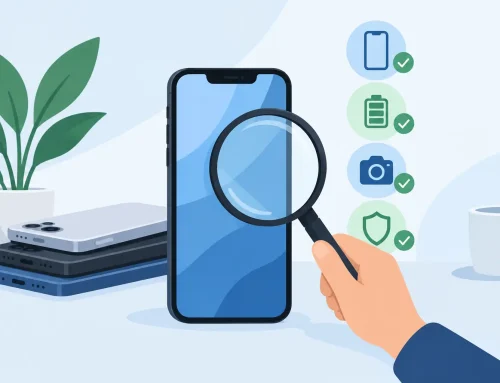
Condition matters more than brand. A well-tested used iPhone with healthy battery performance can be a better purchase than a worn-out one with hidden issues. The same goes for Samsung. For budget buyers, the real win is not just the model name. It is getting a phone with clear condition grading, honest battery information, and proper checks before purchase.
If you are shopping pre-owned, buy with your eyes open. Screen condition, battery health, charging reliability, camera function, and network compatibility matter more than marketing claims. That is why many buyers prefer stores that let them inspect and test used devices instead of taking a gamble.
Battery, camera, and everyday use
For pure battery life on a budget, Samsung often does well. Many Galaxy A series devices are built around large batteries and efficient screens. If your daily routine is messaging, video streaming, browsing, rideshare apps, and social media, a budget Samsung can feel very practical.
Camera performance depends heavily on model and price tier. Samsung often gives you more lenses and more camera features at lower prices, but more lenses do not always mean better real-world photos. iPhones, even older ones, are still strong for consistent point-and-shoot results, video recording, and social media app performance.
If your priority is simple, reliable photos and video with minimal tweaking, iPhone has an edge. If you want more camera options at a lower cost and do not mind adjusting settings or accepting mixed low-light performance, Samsung can give better value.
For gaming and multitasking, newer Samsung mid-range devices can be surprisingly capable. For app smoothness and long-term responsiveness, iPhone still has a strong reputation. Here again, your exact budget changes the outcome more than the logo does.
Software and support matter more than most buyers think
People often decide based on screen size or camera count, then regret the phone later because of software experience. That is a mistake.
Apple’s strength is consistency. Updates are easy to understand, apps are well optimized, and the experience is similar across devices. If you want a phone that feels simple to manage, iPhone is hard to argue against.
Samsung has improved a lot on software support and interface quality. Its newer budget and mid-range phones are more polished than they used to be. But Samsung’s wider product range also means the experience can vary more from one model to another. That is not necessarily bad, but it does mean you should choose carefully rather than assume every Galaxy phone feels the same.
So which one should you buy?
If you want the lowest upfront price, more storage for the money, a bigger battery, and strong everyday value in a brand-new device, Samsung usually makes more sense. This is especially true if you replace your phone every few years and care most about practical specs right now.
If you are open to a previous-generation or used phone, want stronger resale, and prefer a more predictable long-term experience, iPhone can be the better budget move. It costs more to enter, but not always more to own.
For many buyers, the smartest decision is not choosing a brand first. It is setting a real budget, deciding whether new or used is acceptable, and comparing the exact models available in that price range. A great deal on the right device will beat a weak deal on the right logo every time.
If you are still stuck between the two, think less about which brand wins online and more about what you need your phone to do every single day. The best budget phone is the one that fits your use, your timing, and your wallet without forcing a compromise you will notice a week later.