A phone can look clean, run fast, and still have one hidden problem – a worn battery. That is why people ask, what is phone battery health, especially when buying used, trading in an old device, or trying to keep a current phone for another year.
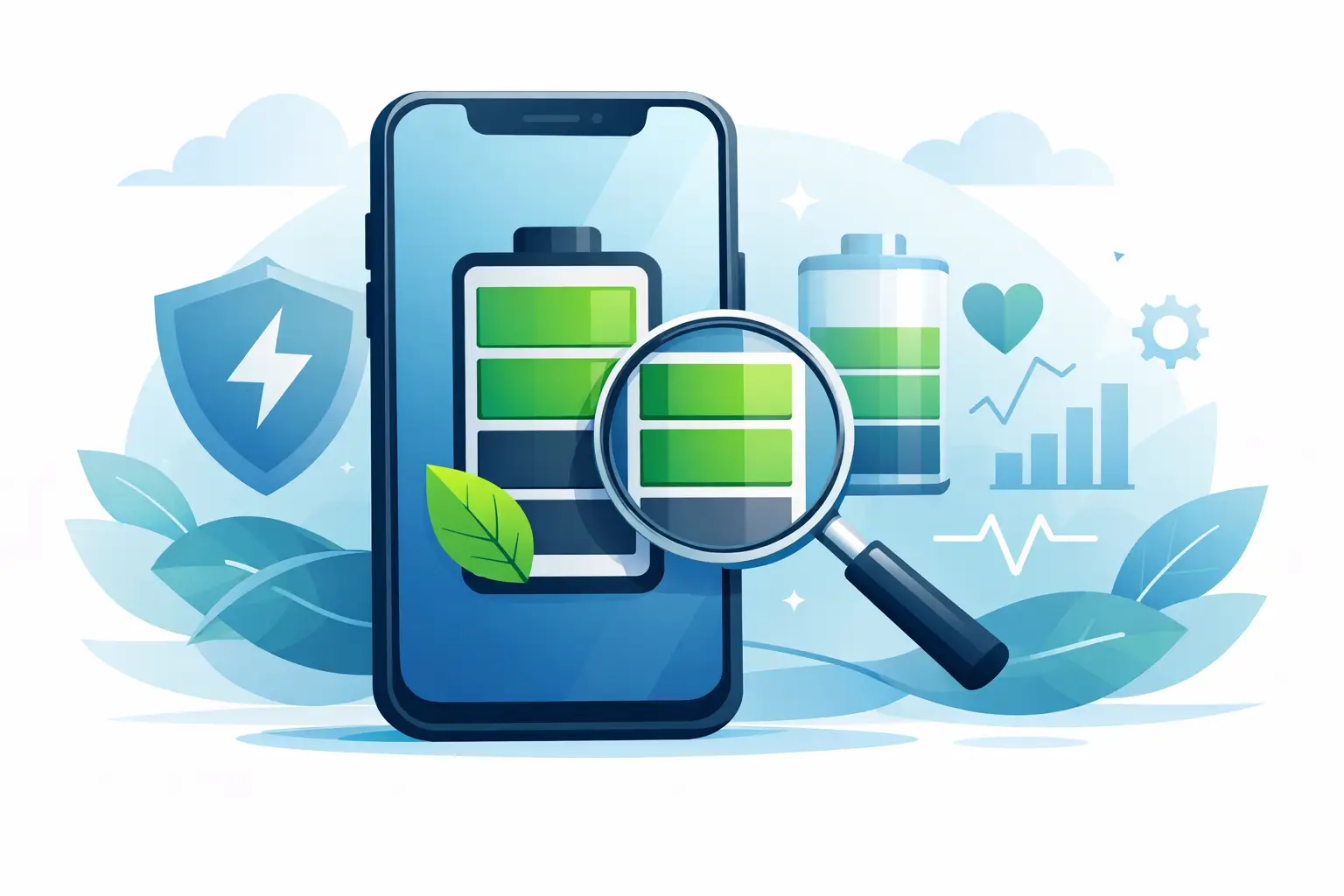
Battery health is a measure of how much your phone battery has aged compared with when it was new. Most phones use lithium-ion batteries, and those batteries naturally wear down over time. As they age, they hold less charge, may drain faster, and can struggle to deliver stable power during heavy use.
If your phone battery health shows 100%, it means the battery can still hold close to its original full capacity. If it shows 85%, the battery now holds about 85% of what it could when new. In simple terms, lower battery health usually means shorter battery life and a higher chance of slowdowns, unexpected shutdowns, or charging issues.
What is phone battery health actually measuring?
Phone battery health is mostly about capacity loss. A brand-new battery is designed to store a certain amount of energy. After months or years of charging, heat exposure, and daily use, that storage capacity drops.
For example, if a phone once lasted all day on a full charge, a weaker battery may only get through half a day with the same usage. That does not always mean the phone itself is bad. In many cases, the battery is simply worn.
Some brands also use battery health to reflect peak performance capability. That means the battery may still charge, but it can no longer supply power as consistently when the phone needs it. This matters during gaming, camera use, video calls, or multitasking, where power demand jumps quickly.
Why battery health matters more than people think
Battery health affects more than screen-on time. It can influence the whole ownership experience.
A phone with poor battery health usually needs more frequent charging. That is annoying for anyone commuting, studying, working long hours, or using mobile data heavily. It also changes the real value of a device. A cheaper used phone can become less of a bargain if the battery needs replacement soon.
It also matters for trade-in and resale. Buyers often check battery condition because it tells them how hard the phone has been used. A device with strong battery health is easier to sell and usually holds better value.
This is especially relevant in the used phone market. Two phones with the same model, storage, and cosmetic condition can feel very different in daily use if one has a much healthier battery.
What percentage is considered good?
There is no single magic number, but there are some practical ranges.
At 90% to 100%, battery health is generally in very good shape. Most users will not notice much difference from new. At 85% to 89%, the battery is still decent, though moderate to heavy users may notice faster drain. At 80% to 84%, wear becomes more obvious, and that is usually the point where people start thinking about battery replacement. Below 80%, performance and battery life may become harder to ignore.
That said, percentage alone is not everything. A phone at 86% battery health can still feel fine if the software is efficient and usage is light. On the other hand, a power user may already be frustrated at 89% if they game often, use hotspot features, or spend all day on video apps.
What causes battery health to drop?
Battery wear is normal. You cannot stop it completely, but some habits speed it up.
Charge cycles are the main factor. Every time you use and recharge your battery, it counts toward its lifespan. A cycle is not just from 0% to 100% in one go. Using 50% one day and another 50% the next day adds up to one full cycle.
Heat is another big issue. Phones left in hot cars, used heavily while charging, or exposed to direct sun for long periods often age faster. High temperatures put stress on lithium-ion cells and can reduce long-term capacity.
Fast charging also creates more heat, though that does not mean fast charging is bad by default. It is useful and safe when managed properly by the phone. But constant high-heat charging conditions can still contribute to wear over time.
Deep discharging can also be rough on batteries. Letting a phone hit 0% regularly is generally worse than topping it up earlier. Keeping a battery at 100% for long periods, especially in hot conditions, is not ideal either.
How to check phone battery health
This depends on the brand.
On iPhones, battery health is easy to find in settings. Apple shows maximum capacity and can also warn users if the battery is no longer supporting normal peak performance.
On Android, it is less consistent. Some brands provide battery condition details in settings or through device care tools, while others do not show a clear battery health percentage at all. In those cases, users may rely on service diagnostics or third-party apps, though results can vary.
That is one reason battery checks matter when buying used. A proper inspection is more useful than guessing based on how long the phone lasts during a short test.
Battery health and used phones
If you are shopping for a pre-owned device, battery health should be part of the decision, not an afterthought.
A lower price can still be worth it if the battery health is fair and the rest of the phone is solid. But the deal needs to make sense. If battery replacement is likely soon, that future cost should be considered together with the purchase price.
This is where transparent listings and proper testing matter. A seller who clearly states battery condition helps reduce risk for the buyer. It also shows the phone has been checked, not just wiped and put on sale.
For buyers comparing options, it is smart to look at battery health alongside storage, RAM, cosmetic condition, and warranty support. A phone with slightly more wear but a stronger battery may be a better daily-use choice than a cleaner-looking unit with poor battery performance.
Can you improve battery health?
You cannot restore lost battery health through settings tweaks alone. Once battery capacity has degraded, it does not go back to new. What you can do is slow down further wear and make the battery easier to live with.
Reducing heat helps. So does avoiding heavy gaming while charging for long periods. Moderate charging habits can also help, such as not leaving the battery fully drained all the time.
Software updates, lower screen brightness, and background app control may improve battery life, but that is different from battery health. Better battery life means the phone lasts longer between charges right now. Better battery health would mean the battery itself has regained capacity, and that is not how aging lithium-ion batteries work.
When should you replace the battery?
The answer depends on the phone model, the replacement cost, and how you use the device.
If battery health is below 80% and you are charging several times a day, replacement is often worth considering. The same goes for phones that shut down unexpectedly, overheat easily, or lag under heavier workloads because the battery cannot maintain stable power.
For a newer or higher-end model, a battery replacement can be a smart way to extend usable life. For an older budget phone, it may make more sense to put that money toward an upgrade instead.
This is where value matters more than theory. The right move is the one that gives you reliable daily use at a sensible cost.
What is phone battery health worth when buying or trading in?
It is worth paying attention to because it affects real-world convenience and real-world value. A phone with stronger battery health is easier to depend on, easier to resell, and usually a safer buy if you want fewer surprises.
If you are trading in a phone, battery condition can also shape how attractive the device is to the next buyer. Even when trade-in pricing is based on several factors, battery wear still affects the phone’s marketability.
For anyone comparing new and used phones, battery health is one of the clearest signs of how much life a device may still have left. It is not the only factor, but it is one of the most practical ones.
A good phone on paper should also be a good phone at 5 p.m. when you still need it to last through the day.