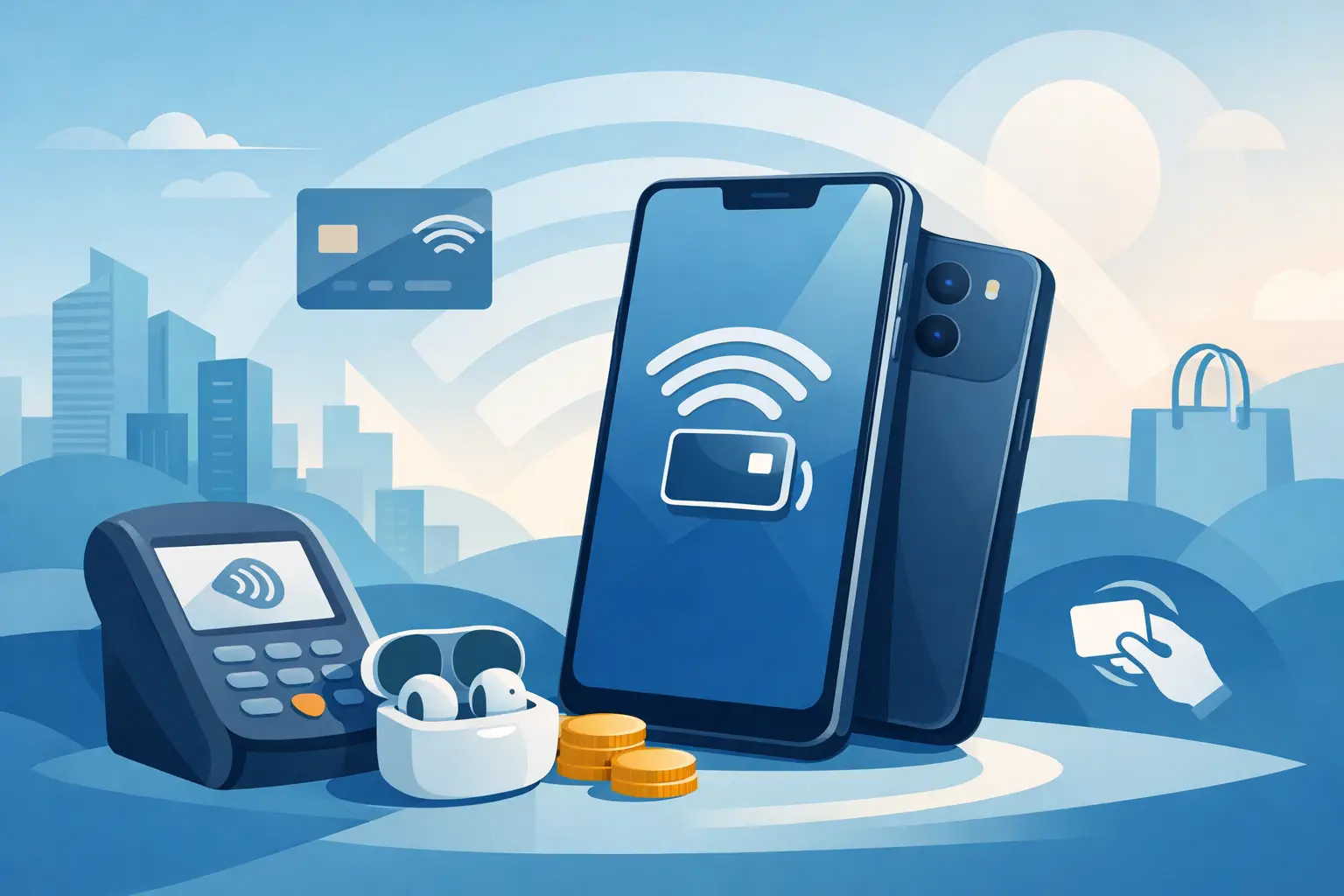
You notice NFC only when your phone does not have it. The first time you try to tap to pay at a train station, convenience store, or coffee shop and nothing happens, it becomes a real feature, not a line on a spec sheet. If you are shopping for a budget phone with NFC, the good news is that you no longer need to spend flagship money to get it. The bad news is that not every cheap phone includes it, and some cut corners in places that matter more day to day.
For most buyers, NFC is not the only reason to choose a phone. It sits alongside battery life, screen quality, camera performance, storage, software support, and basic reliability. That is where budget shopping gets tricky. A phone can look strong on paper because it has a large battery and plenty of RAM, but still feel slow, take poor photos indoors, or miss software updates early. The right buy is usually the one that balances the essentials instead of chasing one big headline spec.
What a budget phone with NFC should actually deliver
At the low end, NFC is often treated like a bonus feature. In practice, it should be considered part of a useful everyday setup if you rely on contactless payment, quick pairing, or digital access cards. A budget phone with NFC should still cover the basics first. That means stable performance for messaging, maps, video, and payments without lag or overheating.
Battery life matters more in this price range because many buyers keep their phones for longer. A good budget model should comfortably last a full day, even with navigation, video, and some camera use. Fast charging helps, but not if it comes at the cost of battery health or if the charger is not included. Storage is another area where cheap phones can become frustrating fast. If the model starts at 64GB, check how much is actually free after the system files are installed. For many users, 128GB is the safer floor.
The screen also deserves more attention than people give it. On a budget device, a sharp LCD can be a better deal than a weak OLED with poor brightness. If you use your phone outdoors often, peak brightness and visibility matter more than marketing terms. The same goes for refresh rate. A 120Hz display sounds attractive, but if the processor is weak, overall use can still feel choppy.
Where brands usually cut corners
When you compare a budget phone with NFC against a midrange model, the difference usually shows up in consistency. Camera systems are the most common example. Many affordable phones advertise multiple rear cameras, but two of them may be low-value extras like macro or depth sensors. What matters is the main camera, especially in indoor light and motion.
Software support is another trade-off. A lower upfront price can look good, but fewer security updates can shorten the phone’s useful life. This is especially relevant if you plan to use digital payment features regularly. NFC itself is simple, but secure payment use depends on the wider software environment staying current.
Build quality can vary as well. Plastic is not a problem by itself. In fact, it can be more durable than glass in daily use. The issue is whether the buttons feel solid, the vibration motor is decent, and the phone holds up after months of charging, pocket use, and occasional drops. Cheap does not have to mean flimsy, but this is where hands-on checking helps.
Best budget phone with NFC: what to prioritize first
If your budget is tight, focus on the features you will feel every day. NFC should be present, but it should not be the only filter. Start with processor and storage, because these affect the phone from the moment you switch it on. A decent chipset with 6GB to 8GB of RAM and 128GB of storage is often a safer buy than a phone with a bigger screen and weaker internal hardware.
Next, look at battery and charging. A 5,000mAh battery remains a strong baseline for value phones, especially for students, delivery riders, commute-heavy users, and anyone who does not want midday charging stress. Then check software reputation. Some brands offer better long-term stability than others, even at similar prices.
After that, evaluate camera expectations honestly. If you mainly scan documents, take daytime shots, and use video calls, many budget models will do the job. If you care about night photos, moving subjects, or natural skin tones, spending a little more can save disappointment.
Which brands make sense in this category
Samsung remains a safe pick for buyers who want familiarity, broad accessory support, and generally reliable software. In the budget tier, you may not get the fastest charging or strongest gaming performance, but you usually get a balanced package.
Xiaomi, Poco, and Redmi often compete hard on specs. You may find stronger processors, larger memory configurations, or faster charging at the same price. The trade-off can be software preference. Some buyers are fine with it, others are not. It depends on whether you care more about raw value or a cleaner out-of-box experience.
Realme and Oppo often sit in a practical middle ground for mainstream users. The designs are usually modern, charging is often decent, and daily performance can be solid for the price. Honor has also become relevant again in value-focused segments, with some models balancing battery life and display quality well.
For pure entry-level shopping, Infinix can look attractive on price, but this is where careful comparison matters. You may get plenty of hardware on paper, but long-term support and refinement can vary from model to model.
New or used makes a real difference here
If your goal is the best value, do not rule out used or pre-owned devices. A used midrange phone from a reliable brand can be a smarter buy than a brand-new entry-level model. You may get better cameras, a sharper screen, stronger build quality, and more dependable NFC performance for similar money.
This works best when the seller is transparent about battery condition, cosmetic grade, and test status. A proper checked device can stretch your budget much further than buying the cheapest sealed box available. It is also useful if you want a model from a known lineup that originally sat above the budget class.
That is one reason buyers in Singapore often compare both new and used stock before deciding. A shop like Gadget Affair can make that easier when there is clear listing info and the option to inspect or test condition before buying.
How to avoid buying the wrong budget phone with NFC
The easiest mistake is assuming NFC is standard across every model from a brand. It is not. Sometimes one storage variant has it and another does not. Sometimes the global version includes it while another regional version leaves it out. Always confirm the exact model, not just the series name.
The second mistake is overvaluing headline specs. A 108MP camera, 12GB RAM expansion claim, or giant display can distract from weaker real-world performance. Virtual RAM is not the same as physical RAM. Extra camera lenses are not the same as better photos. Bigger is not always better if the phone is dim outdoors or too large for one-handed use.
The third mistake is ignoring how you actually use your phone. If you commute daily and use tap-to-pay often, NFC is essential. If you mostly need messaging, YouTube, and hotspot use, battery and signal stability may matter more than display extras. Buying well means matching the phone to your routine, not to a flashy promo sheet.
A simple checklist before you buy
Before paying, confirm that NFC is supported and active on the exact device variant. Check the storage capacity, charging speed, update policy, and whether the phone is a local set if that matters to you. If it is used, ask about battery health, screen condition, and whether all functions have been tested, especially contactless features, charging, cameras, and speakers.
If possible, hold the phone for a minute. Weight, grip, screen brightness, and responsiveness tell you more than a spec table ever will. A practical phone should feel ready for daily use from the first day, not like a compromise you will need to replace in six months.
A budget phone with NFC is worth buying when it saves money without creating daily friction. Get the basics right, verify the exact model, and choose the phone that stays dependable after the price tag stops looking impressive.