Your current phone still works, but the battery drains by lunchtime, photos look soft at night, and storage is constantly full. That does not automatically mean you need the newest flagship at full retail price. This used phone upgrade savings example shows how buying a checked pre-owned device and trading in your old one can leave more room in your budget for the things that actually matter.
A used phone upgrade savings example with real numbers
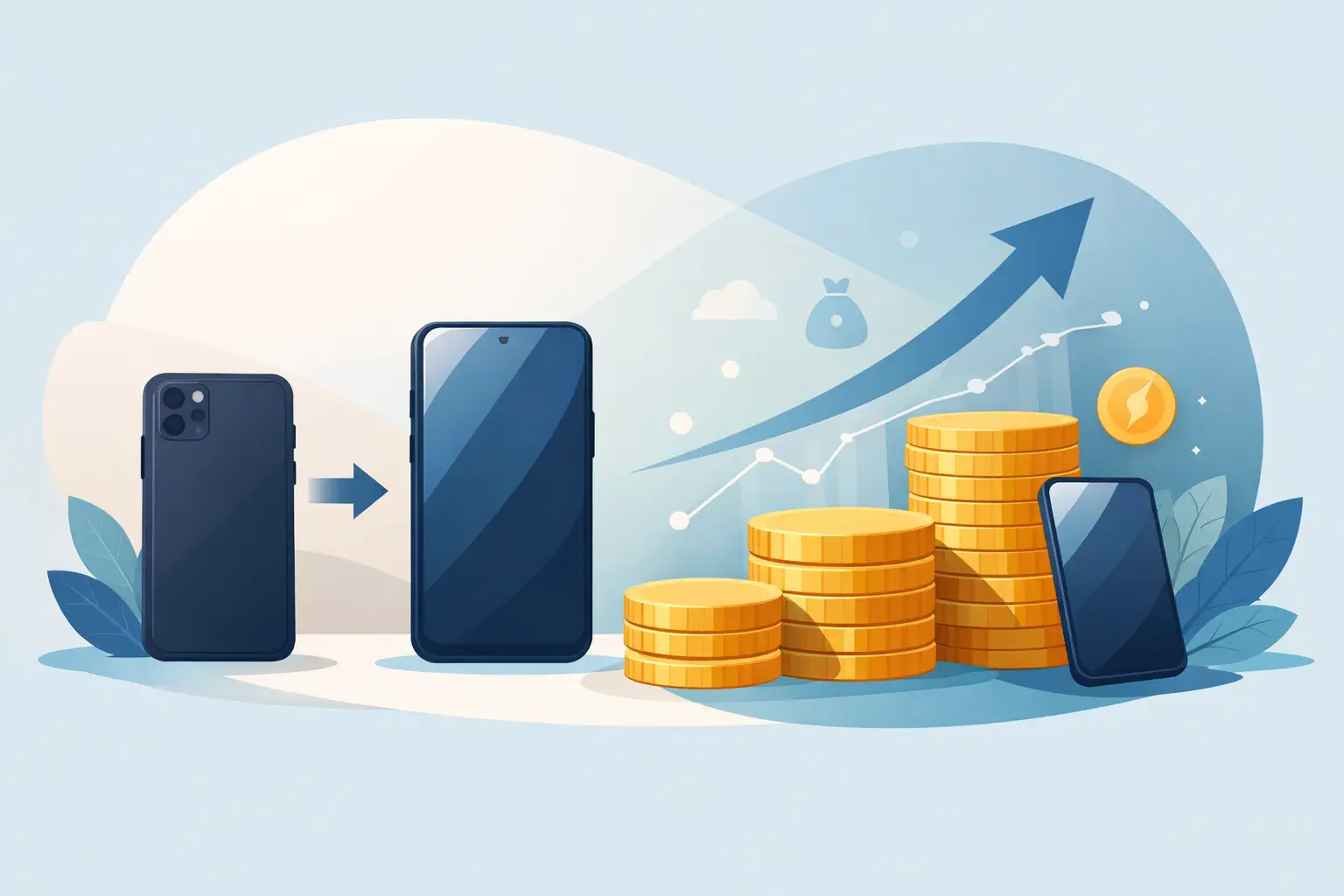
Let’s say you are moving from a three-year-old 128GB phone to a newer 256GB flagship model. A brand-new current-generation model with similar storage may cost about S$1,600. A verified pre-owned model from the previous generation, in good condition, may be listed around S$950.
At first glance, the saving is S$650. But the full upgrade cost is lower if your old phone still has trade-in value.
Assume your current phone is working properly, has no major screen damage, and can be traded in for S$250. Your numbers look like this:
- New current-generation phone: S$1,600
- Less trade-in value: S$250
- Your out-of-pocket cost: S$1,350
Now compare that with the inspected pre-owned option:
- Used previous-generation phone: S$950
- Less trade-in value: S$250
- Your out-of-pocket cost: S$700
That is a S$650 difference in cash paid. For many buyers, the used model still delivers the upgrades they wanted: better camera processing, a faster chip, more storage, a brighter screen, and a fresh battery life improvement over their old device. The newest model may have a few extra features, but those features need to be worth an additional S$650 to you.
This is where a sensible upgrade decision starts. Do not compare only the sticker prices. Compare the cost after trade-in, the storage you are getting, the condition of the device, and how long you realistically plan to keep it.
Why last year’s flagship is often the smart buy
Phone prices usually drop fastest after a newer series launches. That does not make the previous flagship outdated. Most premium phones from the last one or two generations are still quick for daily apps, mobile games, video calls, navigation, banking, and social media.
For a student, a previous-generation device can mean getting 256GB instead of settling for a new 128GB model. For a working professional, it can mean choosing a phone with a stronger camera system without stretching the monthly budget. If you just need reliable performance and good battery life, a well-kept used phone may make more sense than paying for features you will rarely use.
There is a trade-off. A brand-new phone generally comes with the longest manufacturer support window, a full retail package, and the comfort of being the first owner. A used phone has already had some of that early depreciation. Its battery condition, cosmetic wear, and remaining warranty coverage can vary. That is why the seller’s checks and condition reporting matter as much as the model name.
Check the device condition before you count the savings
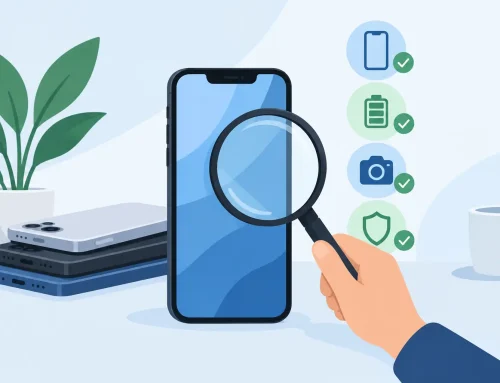
A low used-phone price is only a good deal if the phone is suitable for daily use. Before buying, check the listing details carefully and test the device in person when possible. At Gadget Affair, customers can view and test used devices at the store, which is especially useful when you want to confirm the screen, cameras, buttons, speakers, and overall feel before committing.
Start with the screen. Look for deep scratches, dead pixels, flickering, burn-in, or areas that do not respond to touch. Small cosmetic marks may be acceptable if the price is right, but screen damage can become expensive quickly.
Next, check battery health where the operating system provides that information. Battery health is not the whole story, since usage patterns affect real-world endurance, but it gives you a useful starting point. If you use your phone heavily for work, gaming, or delivery apps, paying a little more for a unit with better battery condition can be worth it.
Then test the practical features people forget about: charging port, wireless charging if applicable, fingerprint sensor or face unlock, vibration, microphones, SIM detection, Wi-Fi, Bluetooth, and cameras. Confirm that the phone is not locked to another owner’s account and that it can be reset and activated normally.
A transparent used-phone listing should make it easier to understand what you are buying. Storage capacity, color, device grade or visible condition, included accessories, and local set status all affect value. Two phones with the same model name can be very different deals if one has double the storage, better condition, or more useful remaining coverage.
Do not overpay for a feature you will not use
The most expensive upgrade is often driven by a spec that sounds impressive but does not change your day. Before comparing models, identify what your current phone is failing at.
If storage is the problem, prioritize a higher-capacity used model. Cloud storage helps, but it does not always solve the issue for people who keep lots of videos, games, offline music, or work files. A 256GB pre-owned phone can be better value than a brand-new 128GB phone with a newer processor.
If your battery is the problem, compare battery condition and charging speed rather than buying based on camera megapixels. If photos are the issue, look at camera samples, stabilization, night performance, and lens options. If your phone lags, check the chip, RAM, software support, and how the model performs with the apps you use every day.
This approach also prevents upgrade regret. A device that fits your actual usage for S$700 is better value than a S$1,350 device chosen only because it is the latest release.
Factor in the costs around the phone
Your upgrade budget should include more than the handset. You may need a new case, screen protector, charging cable, or adapter if your current accessories are not compatible or are worn out. Add these costs before deciding how much you have saved.
For example, if the used phone costs S$700 after trade-in and you spend S$60 on protection and a cable, your real total is S$760. If the new phone costs S$1,350 after trade-in and requires the same S$60 in accessories, the gap remains S$590. The saving is still meaningful, but now you are working with a realistic number.
Also consider resale value later. Popular iPhone, Samsung Galaxy, Google Pixel, Xiaomi, and other major-brand models tend to be easier to trade in when they remain in good condition. Choosing a common storage configuration and protecting the device from day one can help preserve more value for your next upgrade.
When a new phone may be the better choice
Used is not always the answer. A new phone can be the better buy if the price difference is small, you need the longest possible software support, or you rely on maximum battery endurance every day. It may also make sense if a current promotion puts a new model close to the price of a used alternative.
The same applies if you need a specific feature that older models do not have, such as a particular camera system, satellite safety feature, higher refresh-rate display, or newer connectivity standard. Be honest about whether it is a need or simply a nice extra.
The goal is not to buy used at all costs. The goal is to buy the phone that gives you the strongest value after condition, trade-in, storage, expected lifespan, and total spend are considered.
Before you upgrade, put the two real out-of-pocket figures side by side. Test the used option, ask about its condition, and check what your current device is worth. If the older flagship handles everything you need and keeps several hundred dollars in your pocket, that is not settling. That is buying smart.