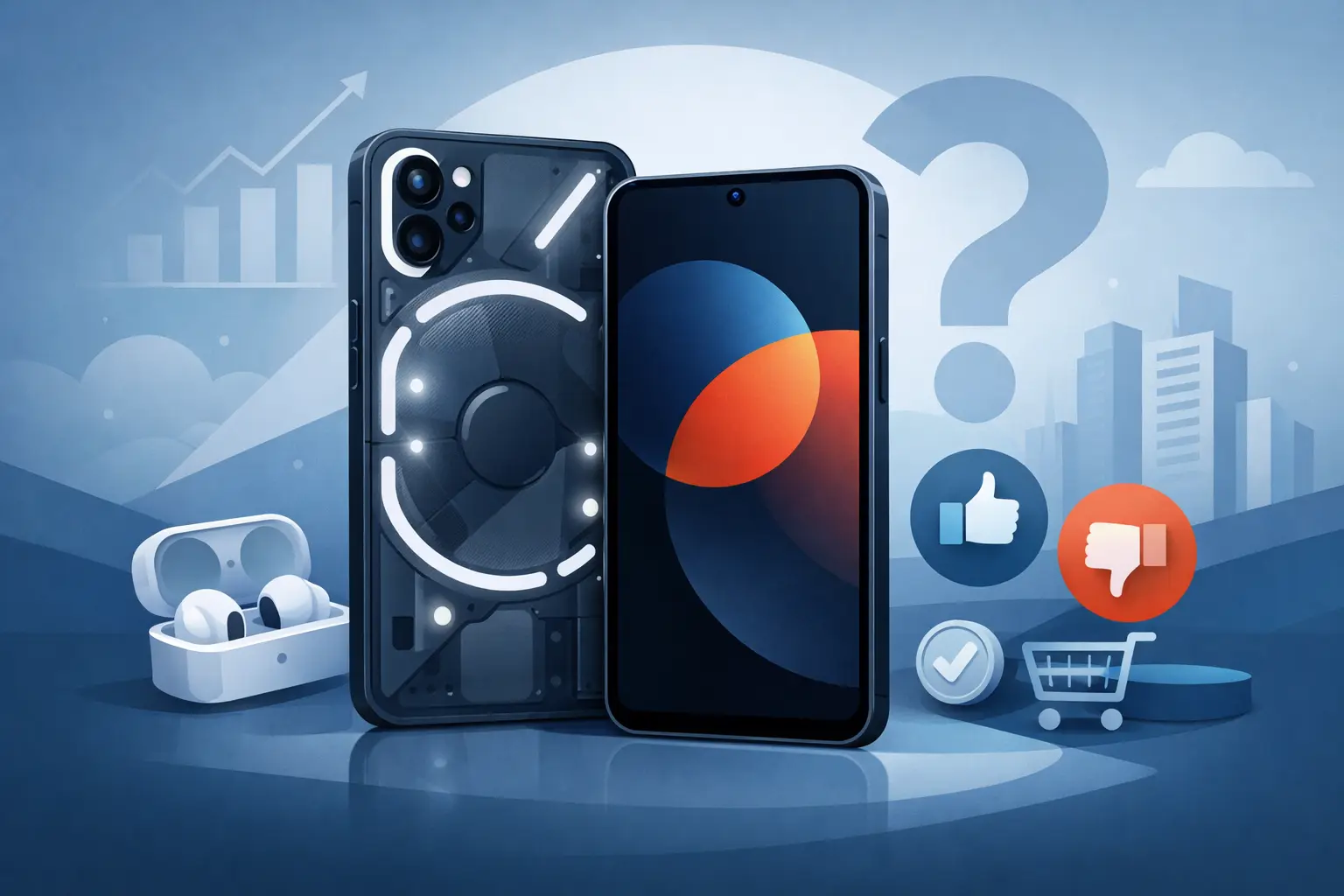
The Nothing Phone 2a stands out before you even turn it on. In a market full of safe, similar-looking midrange phones, this one clearly wants to be noticed. That alone is not enough to justify a purchase, though, so this nothing phone 2a review looks at the part that matters more – what you actually get for the money, and whether it makes sense against strong competition from Samsung, Xiaomi, Poco, and others.
For buyers who care about value, the Phone 2a gets a lot right. It has a large AMOLED display, solid battery life, clean software, and a design that does not feel generic. At the same time, it is not perfect. Camera performance is good rather than class-leading, gaming power is respectable but not top-tier for the price, and the signature Glyph lighting is more of a bonus than a real reason to buy.
Nothing Phone 2a review: design and display
The first thing most people notice is the back. Nothing keeps its transparent-inspired look and the Glyph light strips, so the Phone 2a feels different from the usual plastic midrange device. That matters more than some reviews admit. If you are spending in the midrange bracket, it is reasonable to want a phone that does not look cheap.
Build quality is good for the segment. It is lightweight enough for daily use and does not feel awkward despite the large screen. The plastic frame and back may sound less premium on paper than glass, but plastic is also less stressful in day-to-day use. It is lighter, less fragile, and easier to live with if you are not planning to keep the phone in a thick case.
The 6.7-inch AMOLED display is one of the strongest parts of the package. Colors look rich, blacks are deep, and scrolling feels smooth thanks to the high refresh rate. For video, social apps, web browsing, and general use, it performs like a phone that costs more. Brightness is decent for outdoor use, though very harsh sunlight can still be a challenge, which is common in this price range.
Bezels are slim enough to keep the front looking modern, and the centered punch-hole camera helps it look tidy. For anyone upgrading from an older budget phone, the display alone will feel like a major step up.
Performance in daily use
The Phone 2a uses a MediaTek Dimensity chip rather than a Snapdragon processor, which may matter to buyers who strongly prefer one brand over another. In real use, the bigger question is whether the phone feels fast enough. The answer is yes for most people.
Apps open quickly, multitasking is smooth, and the phone handles everyday work without fuss. Messaging, streaming, maps, shopping apps, camera use, and social media are all comfortably within its range. Nothing OS also helps here. The software is clean, light, and does not feel overloaded with duplicate apps or unnecessary clutter.
That cleaner software experience is one of the Phone 2a’s biggest advantages. Some competing phones offer bigger spec numbers on paper, but they come with heavier interfaces and more preloaded apps. If you want a device that feels straightforward from the start, the Phone 2a has a real edge.
Gaming is a more mixed story. Casual and moderately demanding games run well enough, and sustained performance is generally stable. But if your priority is maximum frame rates for the lowest price, there are gaming-focused alternatives from Poco and similar brands that may offer stronger raw performance. So this is not the automatic best pick for every power user. It is better described as balanced than aggressive.
Software and long-term value
Software matters more now than it did a few years ago. A phone can have decent hardware, but if the software feels messy or support is weak, the value drops quickly. The Phone 2a does well here.
Nothing OS is one of the cleaner Android experiences in the midrange category. The visual style is distinctive without becoming annoying, and it feels intentional rather than flashy for the sake of it. If you like a near-stock Android feel with a bit more character, this phone gets the balance right.
Long-term support also adds value. Buyers keeping a phone for two to four years should care about update policy, bug fixes, and overall software reliability. The Phone 2a is a stronger option than many cheaper alternatives that look attractive at first but lose appeal when updates slow down.
This matters even more for practical buyers who are comparing local sets, resale value, and trade-in potential later on. A device with cleaner software and a stronger update promise usually ages better.
Cameras: good enough, not unbeatable
Camera quality is one of the biggest reasons people hesitate between midrange models, and this is where expectations need to stay realistic. The Phone 2a does a good job, but it is not a camera king.
In daylight, the main camera captures pleasing photos with decent detail and balanced color. Images are generally ready to share without much editing. Dynamic range is good enough for casual use, and Nothing avoids some of the overprocessed look seen on certain rivals.
Portraits and everyday shots are reliable, which is what most buyers actually need. Food photos, street shots, pets, and travel snaps come out well enough for social media and personal use. The ultrawide camera is useful, though quality drops compared to the main sensor, especially when light is less favorable.
Low-light performance is acceptable rather than outstanding. Night shots can look good if you hold steady and give the camera a moment to process, but this is still a midrange device. If camera performance is your top priority above design and software, some competitors may deliver stronger results in specific situations.
The selfie camera is solid for video calls and social content. Skin tones are generally handled well, though results can vary depending on lighting. Video performance is decent for casual users, but serious mobile videographers will still want something higher up the range.
Battery life and charging
Battery life is one of the Phone 2a’s strongest selling points. For many users, it comfortably lasts a full day and often stretches beyond that with moderate use. That makes it practical for work, commuting, streaming, and general daily use without constant battery anxiety.
This is especially useful for students and young professionals who are out all day and do not want to carry a power bank. Efficient software and sensible power management help the phone deliver reliable stamina.
Charging is reasonably fast, though not the fastest in the category. Some competing brands offer more aggressive charging speeds, and for a few buyers that will matter. Still, there is a trade-off. Ultra-fast charging sounds great on a spec sheet, but overall battery consistency and software efficiency are often more valuable in real use. The Phone 2a leans toward that practical side.
Is the Glyph interface useful?
The Glyph lights are part of what makes a Nothing phone a Nothing phone. They can show notifications, charging progress, timers, and other visual alerts. They are fun, and they do give the device a distinct identity.
But it is better to treat them as a bonus, not a buying reason. For some users, the Glyph interface becomes part of daily habit. For others, it is something they enjoy for a week and then mostly ignore. That does not make it pointless, but it does mean you should not pay a premium just for the lights.
The better reason to buy this phone is still the full package: display, battery, clean software, and a design that feels fresh.
Who should buy it
This nothing phone 2a review comes down to fit. If you want a midrange Android phone that looks different, feels smooth, lasts well on a charge, and avoids bloated software, this is an easy model to shortlist. It suits buyers who want a dependable everyday phone with enough style to feel like an upgrade.
It is especially appealing if you are tired of generic midrange designs or heavy Android skins. It also makes sense for buyers who keep phones for a few years and care about overall experience more than just benchmark numbers.
If your top priority is gaming power per dollar, camera performance in difficult lighting, or the absolute fastest charging in the category, you should still compare a few alternatives before deciding. The Phone 2a is strong, but it is not automatically the best at every single thing.
For most people, though, it gets the fundamentals right. That is why it is easy to recommend. The Nothing Phone 2a is not trying to be a cheap flagship killer. It is a smart midrange phone with a clear identity and very few serious weak spots. If that sounds like what you need, it is probably worth your money.