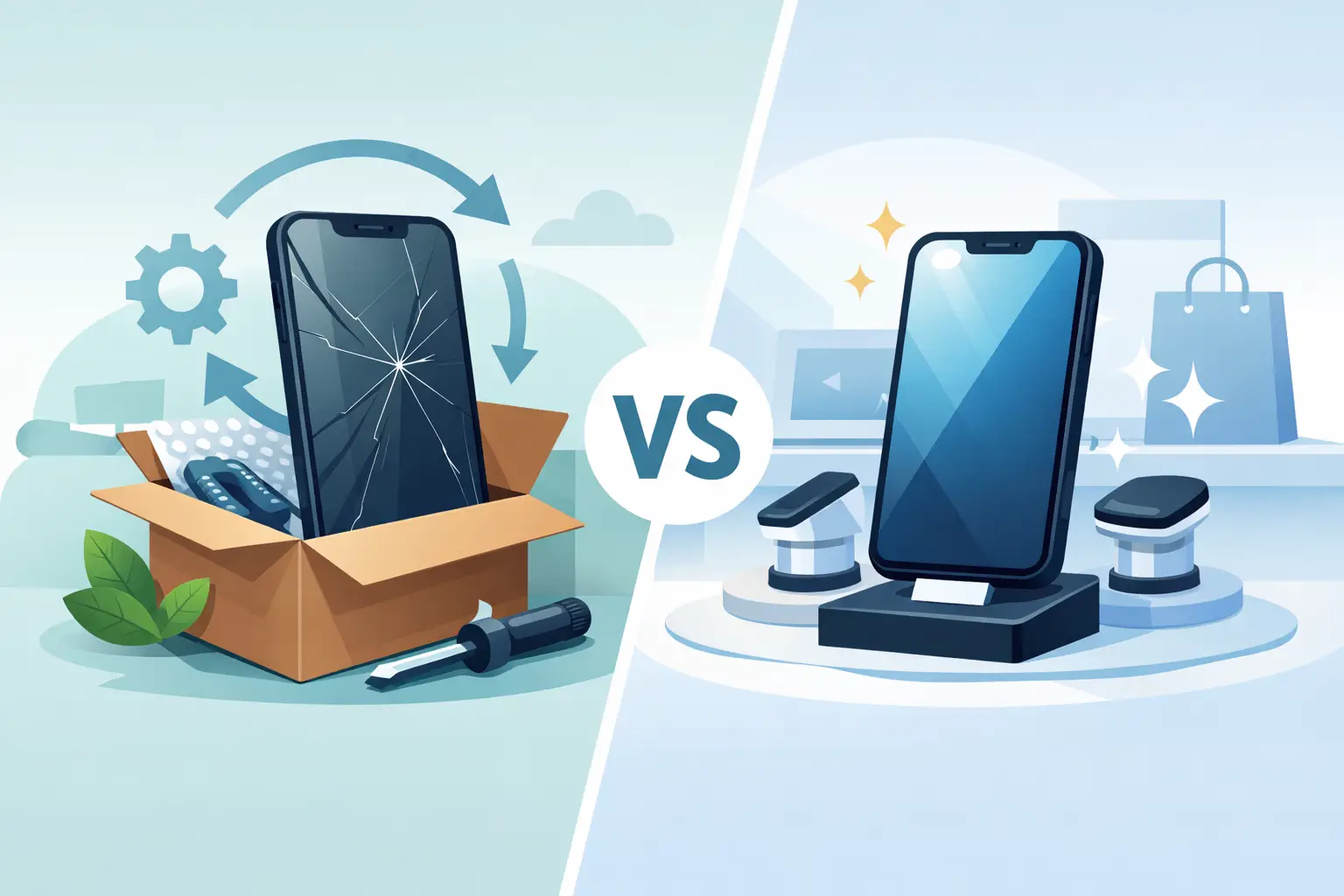
A low price can make almost any phone look like a deal. But with a refurbished phone versus display set, the reason behind that price matters more than the number on the tag. One may have been inspected, repaired, and prepared for resale. The other may have spent months running demos under bright store lights. They are not the same type of device, even when the model, storage, and color match.
For shoppers who want a recognizable brand without paying full retail price, both options can make sense. The smarter choice depends on how the phone was used before sale, what checks were done, the battery condition, and whether the savings are enough to cover the trade-offs.
What Is a Refurbished Phone?
A refurbished phone is a pre-owned or returned device that has been checked before being sold again. Depending on the seller and the phone’s condition, this can include testing the screen, cameras, speakers, microphones, charging port, buttons, connectivity, biometric features, and battery performance. Parts may also be replaced when needed.
The word refurbished is broad, so do not assume every seller follows the same standard. Some devices only receive basic testing and a reset. Others go through a more detailed inspection, with worn components replaced and cosmetic condition clearly graded. Ask what was tested, whether any parts were replaced, and what warranty or return support applies.
A good refurbished phone should be fully usable as a daily device. It should activate normally, accept a SIM or eSIM where supported, charge properly, connect to Wi-Fi and Bluetooth, and have no account lock, blacklist issue, or hidden defect. Cosmetic marks can be acceptable if they are stated upfront and reflected in the price.
What Is a Display Set?
A display set, sometimes called a demo unit, is a phone used in a retail display. Customers may have handled it repeatedly, opened apps, tested the camera, and plugged it into a security stand or constant charger. It often looks close to new at first glance because it has not been carried in a pocket or used as someone’s personal phone.
That does not automatically make it a better buy. Display phones can experience a specific kind of wear that is easy to miss. A screen may have been on for long hours at high brightness. The battery may have spent extended periods connected to power. Ports, buttons, and cameras may have been tested by hundreds of people.
Some display models are standard retail units. Others may have demo software, restricted settings, or a special retail configuration that needs to be removed before normal use. This is why a display set should never be bought based on appearance alone. Confirm that it is a fully functional unit suitable for normal activation and everyday use.
Refurbished Phone Versus Display Set: The Real Differences
The biggest difference is not simply used versus almost new. It is the device history.
A refurbished phone usually has a more varied history. It may have belonged to one careful user, come from a trade-in, or be a returned unit. Its wear may be visible around the frame, charging port, or back glass, but a proper inspection can identify functional issues before resale. If the seller is transparent, you know what condition you are paying for.
A display set may have less cosmetic wear on the body but more concentrated stress in a few areas. OLED displays deserve extra attention because static demo screens and long screen-on time can sometimes leave image retention or burn-in. It may only show against a gray, white, or dark background, so do not rely only on a colorful home screen.
Battery health is another key difference. A refurbished phone may have a battery that has been assessed or replaced. A display unit may report decent battery health yet still have experienced heat and continuous charging over time. Battery percentage is useful, but it is not the full story. Test how quickly the phone charges, whether it gets unusually warm, and whether the battery drops sharply during regular use.
Then there is price. A display set should generally be meaningfully cheaper than a sealed new unit because it has been handled and used for demonstration. A refurbished device should be priced according to its grade, age, battery condition, included accessories, and warranty coverage. If either option is only slightly cheaper than new, the value is weak.
When a Refurbished Phone Is the Better Buy
A refurbished phone is often the stronger choice for someone who wants the best specifications for a fixed budget. You may be able to move up to more storage, a better camera system, a higher-refresh display, or a former flagship model rather than buying a new entry-level phone.
It also works well when condition reporting is clear. A small scratch on the frame is easy to live with if the phone is otherwise fully tested, priced fairly, and backed by a useful warranty. For students, backup-phone buyers, parents buying a first smartphone, or anyone upgrading from an older device, that can be a practical trade.
Choose refurbished when the seller can clearly answer these questions: Is the phone unlocked and ready for normal use? Are Face ID, fingerprint scanning, cameras, speakers, and charging working? Is the battery condition stated? Has the device been checked for account locks and network issues? What happens if a fault appears after purchase?
If those answers are vague, walk away. A cheap phone with an unknown repair history can become expensive quickly.
When a Display Set Can Be Worth It
A display set can be a good option when you want a newer model and the exact unit has passed a proper functional check. It may have very little physical wear, come with its original packaging or accessories, and cost less than a sealed set.
This option makes more sense for shoppers who can inspect the device in person. Check the screen at low and high brightness, open a plain white or gray image, test the cameras, make sure the charging port holds a cable firmly, and try the volume and power buttons. If available, test mobile network connection, Wi-Fi, Bluetooth, NFC, and biometric login too.
A display phone is less attractive if it has been powered on for a long period, has a questionable battery, shows even faint screen burn-in, or has no meaningful discount. The newer model name alone should not persuade you. A carefully inspected refurbished unit can be the safer purchase.
Check These Details Before You Pay
Whether you choose refurbished or display, focus on the device in front of you rather than the label. Check the exact model number, storage capacity, network compatibility, and whether it is a local set if that matters for your warranty and service expectations. Confirm what is included, because a missing cable, charger, or box changes the true cost.
Inspect the display closely for dead pixels, discoloration, touch issues, cracks, lifted edges, and burn-in. Test the front and rear cameras in normal lighting, look for fogging inside the lenses, and record a short video to check autofocus and microphones. Plug in a charger, test the speakers, and make a call if possible.
For used iPhones, review battery health and confirm that parts and service history do not show unexpected alerts. For Android phones, check battery behavior, screen quality, cameras, and software status. On any platform, make sure the previous owner’s account has been removed and the device can be reset and activated properly.
The paperwork matters too. Keep the receipt and understand the warranty period, exchange policy, and what kinds of faults are covered. A short warranty is not automatically bad when the price is right, but it should be part of the comparison.
The Best Choice Is the One With Fewer Unknowns
A display set is not automatically better because it looks newer, and a refurbished phone is not automatically risky because another person used it first. The better value is the device with a clear history, verified functions, honest condition report, and a price that leaves room for its remaining lifespan.
If you can test the phone before buying, take the time. At Gadget Affair’s Burlington Square store, viewing and testing a pre-owned device can turn a guess into a confident decision. Pick the unit that feels right in your hand, passes the checks that matter, and still leaves your budget comfortable enough for a case, screen protector, and the next upgrade when the time comes.