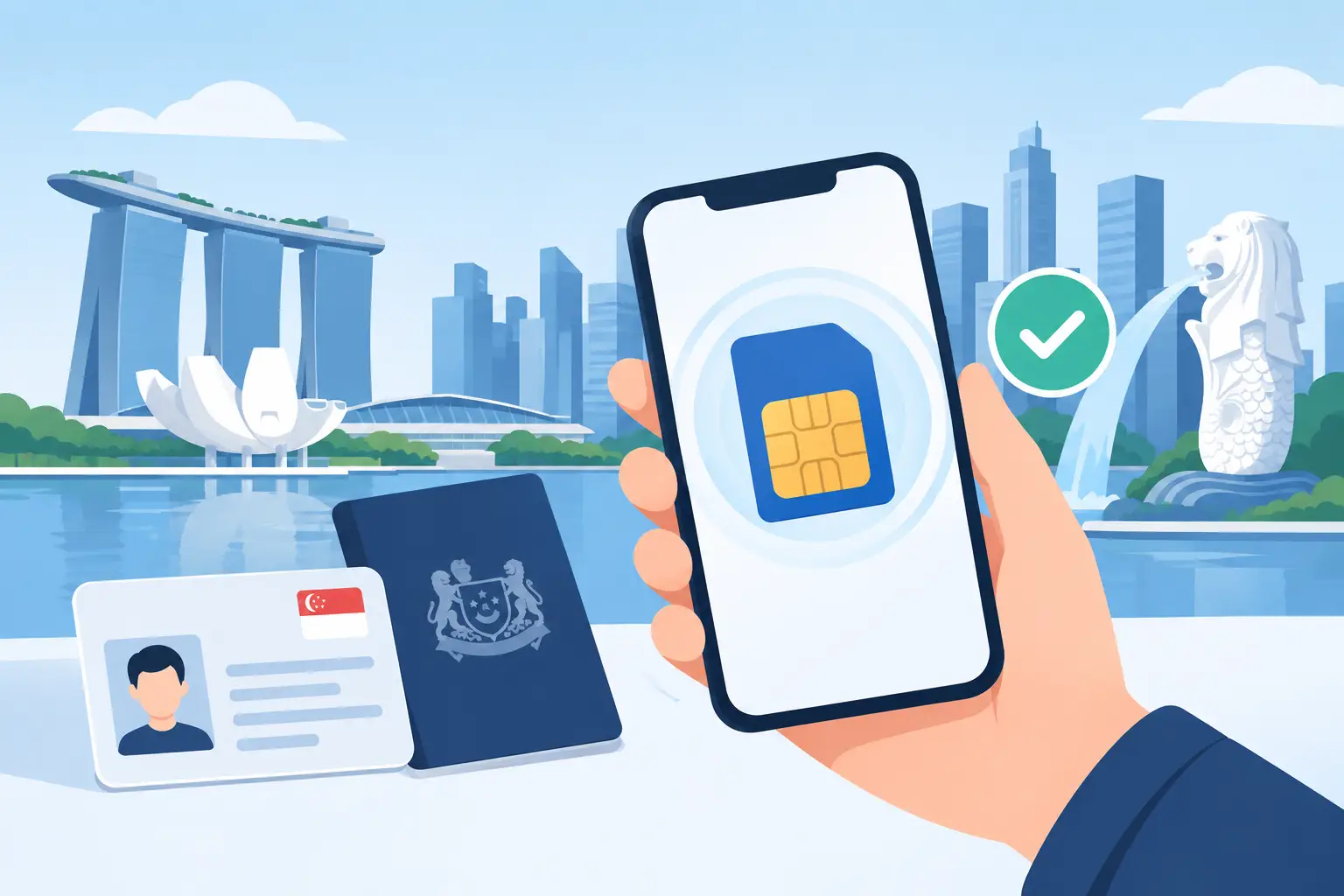
A new SIM card should be a quick purchase, not a frustrating stop in your day. In Singapore, SIM registration requirements are part of the process for prepaid SIM cards, postpaid mobile plans, and many eSIM activations. The good news: if you bring the right identification and make sure your details match, registration is usually straightforward.
Whether you are changing phones, picking up a local prepaid number, or getting a travel SIM for a visitor, this guide explains what you may need, what can hold up activation, and how to avoid buying a SIM that does not suit your situation.
Why Singapore Requires SIM Registration
Singapore requires mobile subscribers to register their SIM cards with a service provider. This helps reduce scams, identity misuse, and criminal activity carried out through anonymous phone numbers. It also means a mobile number needs to be tied to a verifiable person or, in some cases, an organization.
For shoppers, the practical takeaway is simple: you cannot expect to buy a local SIM card, insert it, and use it anonymously. The retailer or telco needs to verify your identity before the line is activated. Requirements can vary based on your residency status, the type of SIM, and the provider’s current process, so it is worth checking before you head out.
SIM Registration Requirements: What ID Do You Need?
The identification you need depends on whether you are a Singapore citizen, resident, work pass holder, or visitor. Bring the original, valid document rather than relying on a photo or photocopy. A retailer or carrier may need to inspect the physical ID, scan it, or verify details through an approved digital process.
Singapore citizens and permanent residents will generally use their NRIC. Foreign residents commonly register with a valid passport alongside the relevant long-term pass or identification recognized by the service provider, such as an Employment Pass, S Pass, Student’s Pass, Dependant’s Pass, or work permit.
Visitors normally need a valid passport. A short-term traveler should be especially careful when selecting a SIM, because tourist-focused prepaid plans may have different validity periods, data allowances, and registration steps from standard local prepaid options.
Your name, document number, and other details must be entered accurately. A small typo can delay activation or cause a failed registration. If your passport has recently been renewed, use the current passport, not the expired one that may still be associated with an old mobile account.
Can Someone Else Register a SIM for You?
In most cases, the person whose name will be attached to the number should be present and provide their own identification. Do not assume a friend, parent, coworker, or shop staff member can register a SIM under their details for you to use later.
That arrangement can create trouble when you need a replacement SIM, want to port the number to another carrier, reset account access, or verify ownership. The registered subscriber is generally the person recognized by the provider. For a number you plan to keep, make sure it is registered to you.
Business and corporate lines may follow a separate process. The company may need to provide business documentation and appoint an authorized representative. If you are buying lines for a team, check with the carrier in advance rather than treating it like an individual prepaid purchase.
Prepaid SIM Cards, Postpaid Plans, and eSIMs
Registration is not limited to a particular SIM format. A physical prepaid SIM, a monthly postpaid plan, and an eSIM all require subscriber verification when they are issued for local service.
A prepaid SIM is usually the fastest route if you need a number with a fixed budget and no long-term commitment. You pay upfront, complete registration, and top up when needed. This is a practical choice for many students, travelers, secondary-phone users, and customers who want to control spending closely. However, keep an eye on the SIM’s validity date and top-up requirements. A number may eventually expire if it is not maintained according to the provider’s terms.
A postpaid plan may involve additional eligibility checks, billing details, and contractual terms. It can make sense if you want recurring data, handset bundles, or a plan you will use long term. Read the monthly fee, data policy, roaming terms, and early termination conditions before signing up. The lowest advertised monthly price is not always the lowest total cost.
An eSIM removes the physical card but not the registration requirement. After your identity is verified, the provider may issue a QR code or use an app-based setup process. Before choosing eSIM, confirm that your phone is unlocked and supports eSIM for the region and model you own. Some imported phone variants have different eSIM capabilities from local sets.
What to Check Before You Buy a SIM
The right SIM is not only about the cheapest price. A good fit depends on your phone, usage, and how long you need the line. Before registering, confirm that the plan works with your device and that you understand its limits.
Check these points carefully:
- Phone compatibility: Your device must support the local network bands and be unlocked if it came from another carrier.
- Physical SIM or eSIM: Make sure your phone has an available SIM slot or supports eSIM activation.
- Data amount and speed rules: Some plans include a large data figure but apply speed limits, daily caps, or fair-use policies.
- Validity period: This matters most for prepaid and visitor SIMs. Know when the plan and number will expire.
- Calls, texts, and roaming: A data-heavy plan may not include the call minutes, SMS, or overseas roaming you expect.
If you are using a dual-SIM phone, decide which line will handle mobile data, calls, and verification texts before you leave the store. This avoids missing one-time passwords because messages are arriving on the other line.
Common Registration Problems and Simple Fixes
Most registration issues are not complicated. They usually come down to identification, device compatibility, or an activation step that was missed.
If registration is rejected, first check whether your ID is valid, readable, and matches the information entered. Names can be tricky when a passport includes multiple given names or a different order from another document. Follow the document exactly and ask the provider how the fields should be entered if anything is unclear.
If the SIM is registered but has no service, restart the phone and give the activation process some time. Check that the SIM is seated correctly, mobile data is enabled, and the correct line is selected on dual-SIM devices. For eSIM, confirm that the cellular plan has been added and switched on in your phone settings.
No signal can also be a device issue. A phone bought overseas may be carrier-locked or may not fully support local network bands. If you are purchasing a used phone, test it with a working SIM before relying on it as your main device. At Gadget Affair, customers buying pre-owned devices can test key functions in store, which is useful when you want to confirm SIM detection and network connectivity before paying.
Another issue is trying to register too many lines without understanding the provider’s limits. Carriers may set controls on the number of prepaid SIMs an individual can hold. If you need several lines for family members, staff, or devices, ask how registration and ownership should be handled instead of registering everything under one person by default.
Keep Your Registered Details Current
Once your SIM is active, protect the number like any other personal account. Do not share one-time passwords, account PINs, or SIM replacement codes. Scammers often target mobile numbers because banks, apps, and marketplaces use them for account verification.
If your ID document, residency status, or contact details change, check whether your provider requires an update. If you lose your phone or SIM, contact the carrier quickly to suspend the line and ask about replacement procedures. Having the number registered correctly makes that recovery much easier.
Buying a SIM is simple when you treat registration as part of the purchase, not an extra hurdle. Bring valid ID, choose a plan that fits how you actually use your phone, and test that your device supports the SIM before you depend on it. A few minutes spent checking these details can save you from activation delays when you need your number most.